Category Archives: U.S. Culture

Hopeful hints of change

When Barack Obama is re-inaugurated as president of the United States this long weekend, the weather is expected to be chilly, bright, and clear. This forecast is symbolically appropriate, as President Obama is beginning to articulate his vision for America with greater clarity, vigor, and purpose.

The team President Obama is assembling around him for his second term suggests an agenda stressing domestic priorities. World events will always compel a U.S. president’s attention, but Obama is signaling clearly that his focus will be on domestic issues. As he emphasized during his reelection campaign, “It’s time for nation building at home”. This is true. The world needs a strengthened America. The world needs an America that has reprioritized and balanced its budget, and bolstered its economy to create more jobs. The world needs an America that has rededicated itself to supporting its citizens with better education, improved infrastructure, accessible healthcare, and other tools to get ahead and provide for themselves and their families into the future.

The administration’s battles with Congress have acquired a different hue lately, hinting at a new dynamic. Despite itself, the Republican-dominated House of Representatives voted for that anathema—tax increases—for those Americans with annual incomes over $400,000.00. Wary of authorizing further spending, Republicans reluctantly also agreed to extend $50 billion in aid to those devastated by Hurricane Sandy in New York and New Jersey last November.

A slim minority of House Republicans breaking with their party and supporting the Democrats to provide the winning votes was essential to passage of these two bills. This is the formula Obama and his team will have to use repeatedly in coming months to get measures through the House of Representatives. Obama will have to keep coaxing such splits in the Republican monolith to enable passage of his legislative priorities. This type of bipartisan behaviour is, of course, how effective democracies should operate.

There is yet another new approach from House Republicans: They announced yesterday they will support extending the government’s borrowing authority for three months, rather than force another fabricated crisis now. This action will give more time to craft agreement on budgets for the new fiscal year, including possible tangible deficit reduction. This extension of the debt ceiling is a most positive and practical concession from the Republican side.

President Obama is also a more seasoned politician and strategist this time round. This past week, he showed how much he has learned from past battles with Congress when he presented very particular proposals for executive and legislative action to curb gun violence. The horrific murders of twenty first-grade students and six adult staff members at their Newtown, Connecticut elementary school in mid-December have galvanized opposition to America’s loose gun laws. Newtown has created the opportunity for changes to America’s permissive gun culture like no other recent mass tragedy involving a gun—and there have, unfortunately, been too many. Shifts in public opinion show majorities of Americans now support, in differing degrees, various specific measures to curb guns.

Since the day of the massacre, which he has described as the “most difficult day” of his presidency, President Obama has appealed for action in common sense, reasonable, and nonpartisan terms. He says Americans will have failed in their duty as parents to keep children safe if they do not act to curtail gun violence.

In making his very specific recommendations for action this week—derived from Vice President Joe Biden’s task force—Obama promised he will “put everything [he’s] got” into getting the announced measures adopted. Having been criticized for “leading from behind” on other issues, his fast, impassioned, and firm response to the gun control challenge is the essence of presidential leadership.

Obama has thrown down the gauntlet to members of Congress and the National Rifle Association. He challenged the American public to put pressure on members of Congress to state their position on the measures “on record” and “…[I]f they say no, ask them why not. Ask them what’s more important: Doing whatever it takes to get an ‘A’ grade from the gun lobby that funds their campaigns, or giving parents some peace of mind when they drop their child off to first grade?” He added, “There will be pundits and politicians and special-interest lobbyists publicly warning of a tyrannical, all-out assault on liberty—not because that’s true, but because they want to gin up fear or higher ratings or revenue for themselves. And behind the scenes, they’ll do everything they can to block any common-sense reform and make sure nothing changes whatsoever.” He has urged members of Congress to “examine their own conscience.”

The NRA’s capture of the legislative process concerning guns at federal, state, and local levels of government has been alarmingly successful until now. Its disturbingly effective modus operandi is to bully legislators to do its bidding. In elections, it spends millions to bolster proponents and, far more importantly, oppose those who reject its viewpoint. The NRA ferociously pursues those who vote against its narrowly defined interests. Republican members of Congress who oppose it have been vulnerable to primary challenges by NRA-sponsored candidates, while Democrats have been vulnerable to general election challenges. Gerrymandered voting districts across America that limit diversity in opinion have further strengthened the hand of the NRA and other special interest groups.

Until now, the NRA has been ruthlessly effective in furthering its agenda. Might the debate about gun control be different after Newtown, especially with such strong presidential sponsorship? How the gun violence prevention debate plays out in Congress could have an enormous impact on President Obama’s second term.

Deer oh deer

The surrogatesWashingtonians do not feel or behave very kindly toward the deer living in their midst. They do try to make nice with reindeer, the close cousins of deer, at this time of year. But the decorative, illuminated Christmas reindeer now offered as peace tokens in neighbourhood yards do not make up for the lack of love extended to real, wild deer most of the year.

The free-roaming sika deer of the Todaiji temple complex in Nara, Japan, are venerated in Shinto belief as “messengers of the gods”. There is, however, nothing sacred or sentimental in how most Washingtonians regard the deer so ubiquitous to these parts. White-tailed deer here are described as “scourge” or “rodents with legs”. This is a bit harsh, to my mind, since deer are certainly more thrilling to encounter than, for example, the rats often seen scurrying in urban environments anywhere in the world. Yet deer too are bearers of disease. Lyme’s disease, a debilitating illness caused by a bite from infected deer tick, is treatable, fortunately. The bulkiness of deer makes them deadly for drivers, especially those traveling fast on area roads. These collisions, of course, also always end very badly for the deer.

My family has journeyed the usual trajectory of most area residents in their feelings toward deer. It was initially quite charming to observe deer in our garden. Especially when the grazing gang included little Bambi-like family members. This pleasure faded somewhat when noticing how much foliage could disappear during visits from deer. I did not mind too much when the leaves munched were from big, settled trees or bushes. But now that I’m mutating into a novice gardener, I’m very much minding the deer.

Virginia’s hot, humid summers and its heavy clay soil present enough gardening challenge. Trying to garden with hungry, wild deer is an obstacle of a different order. I’m learning, most painfully, some of the tricks of the business: I’ve learned about breaking up mothballs and scattering the pieces generously around the base of the plant one is trying to protect. It’s not easy to remember to renew sprayed deterrents on time, so physical barriers ultimately work best. I’ve learned about plumbers’ piping, and how it can be sectioned to protect the trunks of trees. Some young male deer apparently went on a rave in our garden one night and repeatedly rubbed their antlers against numerous tree trunks (apparently to try to get rid of the velvet on the antlers), in between hearty feasting. The remedy this time was fencing with poles. But we’ll see if these trees survive winter and rebound in the spring. Unfortunately, the bark plus waxy coating was removed in some areas.

Deer like to eat bulbs, so I’ve learned that deer-resistant bulbs are essential. Actually, one needs bulbs to be squirrel resistant too since squirrels are always hungry and also rather partial to them. I have to admit to thinking that these athletic little creatures seem to get particular joy digging up bulbs in places—like a raised “deck” or stoep—where they have no competition from deer and the bulb planter naively thinks the bulbs might be “safe”…

Recently, there was an unusual request on our neighbourhood listserv, with a neighbour asking for help with a problem I hadn’t previously considered. Her children had discovered a dead deer in their garden. Northern Virginia Critter Control was unavailable for a couple of days. She had also called the county, but they would not come unless the deer was road kill. What to do? A respondent rather brilliantly suggested dragging the deer into the road!

The happiest place to see deer is when walking in the many wooded parks in Arlington and Fairfax Counties that abut the creeks feeding into the Potomac River. Discovering and enjoying these parks is one of my favourite parts to living in Washington. And the amount of wildlife one can experience is quite surprising, considering how populated the area is. I’ve seen lots of deer, tortoises, quite a few snakes, a raccoon, a coyote, and even a fox. The bird life is impressive too.

And that’s the rub of the problem. It’s we humans who have intruded on these animals’ habitats. The more construction there is, the more squeezed these animals are. No wonder they come to feed in our gardens.

Deer are rampant in the suburbs of Washington, D.C. Without traditional predators to keep the deer population in check, culling or hunting deer is definitely one solution. Such efforts do exist and are highly controversial. They vary from controlled urban archery to regulated public hunts using firearms. There are also hunts conducted by police sharp-shooters. Reintroducing wolves and mountain lion is another possibility, but not for solving a suburban problem.

After the storm

Until Hurricane Sandy’s arrival, neighbourhoods around here looked festive and jolly, cluttered as they were with colourful adornments. Rotund orange pumpkins and pots of chrysanthemums in the warm hues of autumn flanked front doors. Shrubs, bushes, and trees were decked in coats of gold, orange, and red foliage. There were also Halloween decorations, creative or corny, but always spooky—proving again that no one decorates outdoors like Americans. Repetitively mind-numbing political signage for the presidential and congressional elections was everywhere.

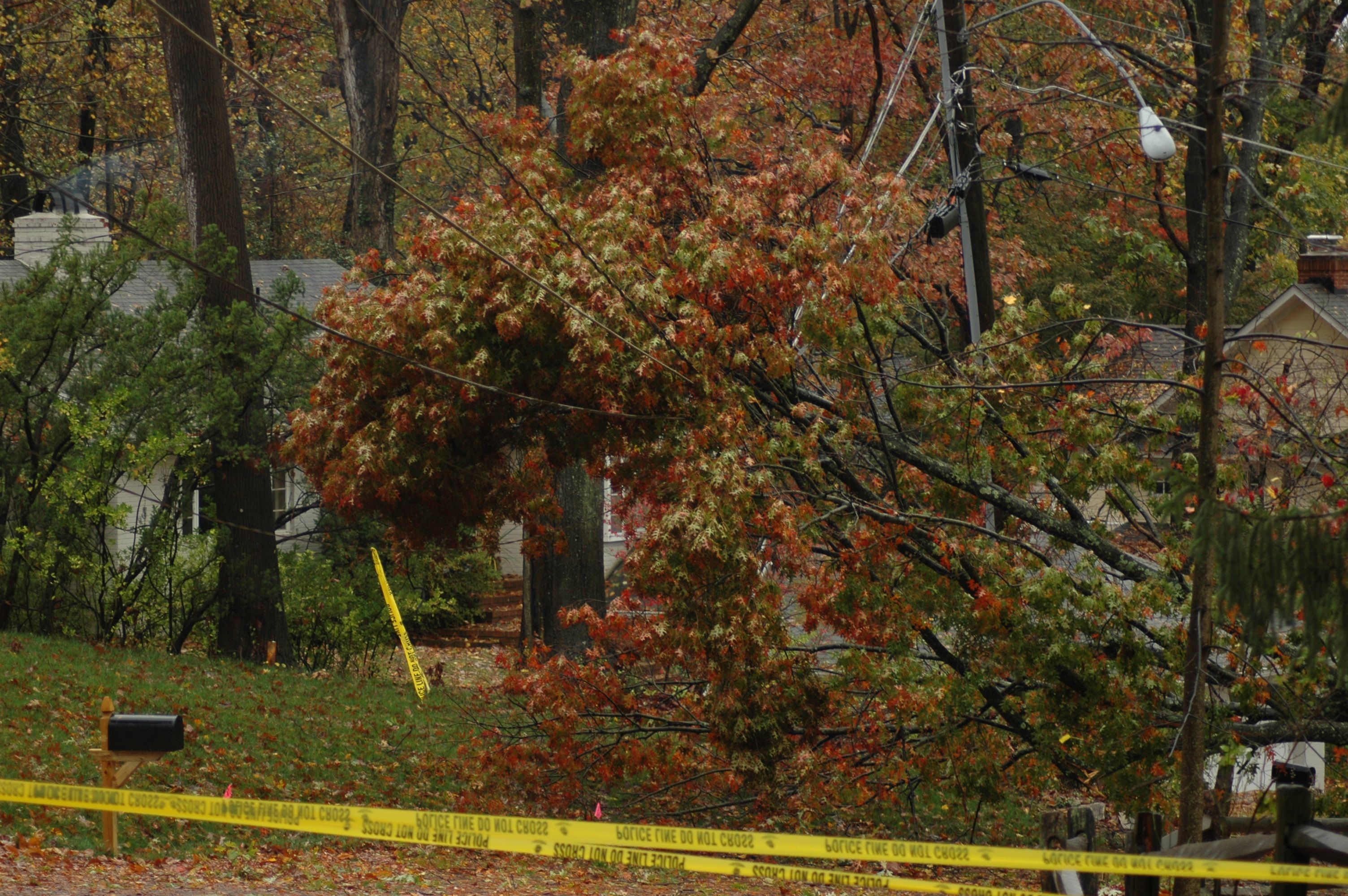
Much of it is gone now. Hurricane Sandy took care of that, and left a world somberly transformed. Nonstop rain and gusting winds stripped off many leaves, creating soggy brown-yellow mounds of unedifying mush. Many folk brought in their chrysants, Halloween decorations, and political signs to prevent Sandy blowing them about and damaging people or property. Those who didn’t take preventative measures had to pick up remnants of dreams for a “Happy Halloween” and a routine election.

People in the D.C. area are lucky. Public transport here closed down for a couple of days, but has mostly resumed. The worst many of us suffered was flooded basements, no electricity for a couple of days, cold homes, defrosting freezers, and yards littered with storm debris. There are unfortunate folk who had trees crashing down on their homes, causing major structural damage. But, relative to those further north and east in New Jersey and New York, we fared very well. It is heartbreaking to see and hear people there grieving for the dozens of loved ones lost, and thousands of homes and livelihoods destroyed. The cleanup from Sandy will be expensive, time-consuming, and require great patience and perseverance.

Everyone is, of course, fixated on Sandy’s impact on the elections. And it could be really significant. Which candidate will “benefit” from the storm and its aftermath? And what will be the effect on voters in the key battleground states of North Carolina, Ohio, and Virginia, never mind Pennsylvania, a blue-leaning state that, before Sandy, suddenly became in contention again for Republicans?

President Barack Obama went back to governing full time for a few days, taking a break from campaigning. The crisis has allowed him to highlight that he is the commander-in-chief, the one who leads the relief effort for those now in dire need. Given the haggling in the campaign over the role and extent of government, he was able to remind Americans how all look to government, as well as NGOs such as the Red Cross, for assistance and support in a disaster like this—even those who lambasted government during the campaign. By being effective, authoritative, and caring, Obama would also been able to create a contrast with the Republicans under President George W. Bush who mishandled the tragedy of Hurricane Katrina in 2005.

Sandy halted early voting in the mid-Atlantic states. Even though early voting has now resumed in states in Sandy’s path—such as in Maryland—reduced hours or days for voting could be significant for this year’s election, especially in crucial swing states. In the 2008 election, for example, around 30 percent of all votes were cast before Election Day. This trend was likely to be heightened this year, as more states now permit early voting, and voters are more familiar with the concept. Prior to Sandy, a National Public Radio commentator estimated that about one fifth of likely voters had already cast their ballots. The campaigns of both Obama and Governor Mitt Romney were encouraging the electorate to vote early, with both campaigns wanting to “bank” as many votes as possible before November 6. With much fanfare, Obama himself voted early in his home city of Chicago, apparently the first sitting president to do so.

In addition to perhaps impacting early voting numbers, Sandy is also likely to affect turnout. This will be so when early voting resumes, and for Election Day itself. Will voters whose homes or businesses were hammered by Sandy care to vote? High turnout typically benefits Democratic Party candidates. So reduced turnout would likely hurt the Democratic ticket more. The profound consequence of diminished turnout among Democratic voters could be that Obama could lose the national popular vote in the election, even as many polls perceive him to be narrowly ahead in the state-based electoral college that determines the outcome of the election.

The halt in campaigning due to Sandy is, frankly, a relief. The negativity, pettiness, and vitriolic nature of both campaigns were becoming extremely off-putting. When the campaigns resume, I fervently hope they will do so with a new tenor. This is probably wishful thinking.

If the demeaning nature and tone of pre-Sandy campaigning was the low point, for me, of this high-stakes election, the categorical high point was the remarks both Obama and Romney delivered at the Alfred E. Smith Memorial Foundation dinner on October 18. If you have not already done so, please watch the full comments of both presidential candidates that evening in New York City. They are riveting.

Their remarks that evening represent the best of U.S. democracy in my eyes. The dinner took place between the second and third presidential debates, at a time of heightened competition between the two men due to Obama’s weak first debate. The remarks both gentlemen delivered that night were, of course, scripted— unlikely by themselves—but the content and way in which both presented them is outstanding.

Humour is an essential part of U.S. society: No one can take them self too seriously; everyone has to be able to make jokes at their own expense. While the veneer of the comments at the Al Smith dinner was funny, the reality was that this was campaigning in a different guise, with very pointed digs being made at each other—and, most importantly, at themselves. Whatever happens on November 6, this encounter will be my best memory from the campaign of 2012.

Electioneering

The presidential campaign permeates everything at present. Even if you’re totally disinterested in politics, the campaign is hard to avoid or ignore. Certainly its ubiquity, the sheer overwhelming quantity of all its manifestations, and the negativity of much of the advertising can be a turn off. And it is such a  l-o-n-g process, even for political junkies like myself.

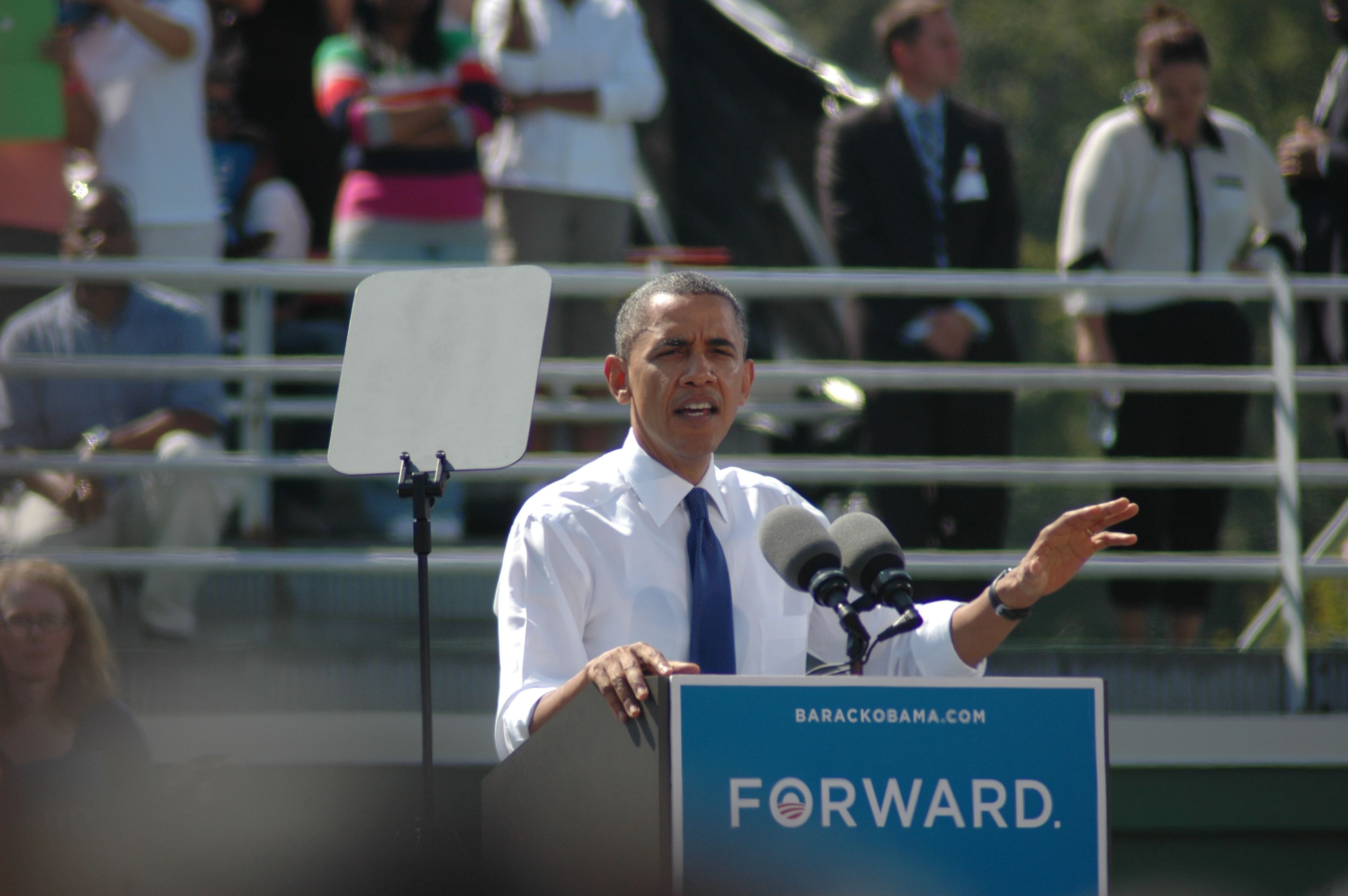
Part of the cacophony relates to living in Virginia, one of the key battleground and swing states—along with Colorado, Florida, Nevada, New Hampshire, North Carolina, Ohio, and Wisconsin—in the race between President Barack Obama and Governor Mitt Romney. Obama has succinctly acknowledged Virginia’s pivotal significance: “If we win Virginia, we will win this election”. Virginia also has an extremely tight U.S. Senate race underway between former governors George Allen and Tim Kaine. The outcome of this race could impact whether the Democratic Party retains the majority in the Senate, or control shifts to the Republicans.

There are so many avenues for campaign activity now. The Internet and social media are drenched in promotion and advertising for the candidates and their platforms. Yet television as a forum still appears to trump web-based promotion. Both of the presidential candidates and their wives have appeared on countless TV programs, including daytime chat shows and late night comedy hours. When in New York last week to address the U.N. General Assembly, Obama did not participate in any traditional bilateral asides with other visiting heads of state, delegating this role to Secretary of State Hillary Clinton instead. Controversially though, his busy schedule did accommodate him and his wife filming a segment for “The View”, a popular daytime talk show.

The biggest television moments for the campaigns will be the three presidential debates and the sole vice-presidential debate. The first debate, which takes place tomorrow night and focuses on domestic policies, will likely attract the largest audience of the campaign, larger than for either of the two parties’ conventions.

TV in Virginia is also saturated with advertising by both campaigns and their surrogate political action committees. Back-to-back political ads have long displaced dog food, hair shampoo, and laundry detergent commercials. More interesting to me is the placement of political ads in video games. Already in 2008, the Obama campaign embedded ads in games like Need for Speed Carbon, and it is doing so again this year in Madden NFL 13, for example. National Public Radio reported yesterday that these ads apparently appear only if you are playing online games in a targeted battleground state.

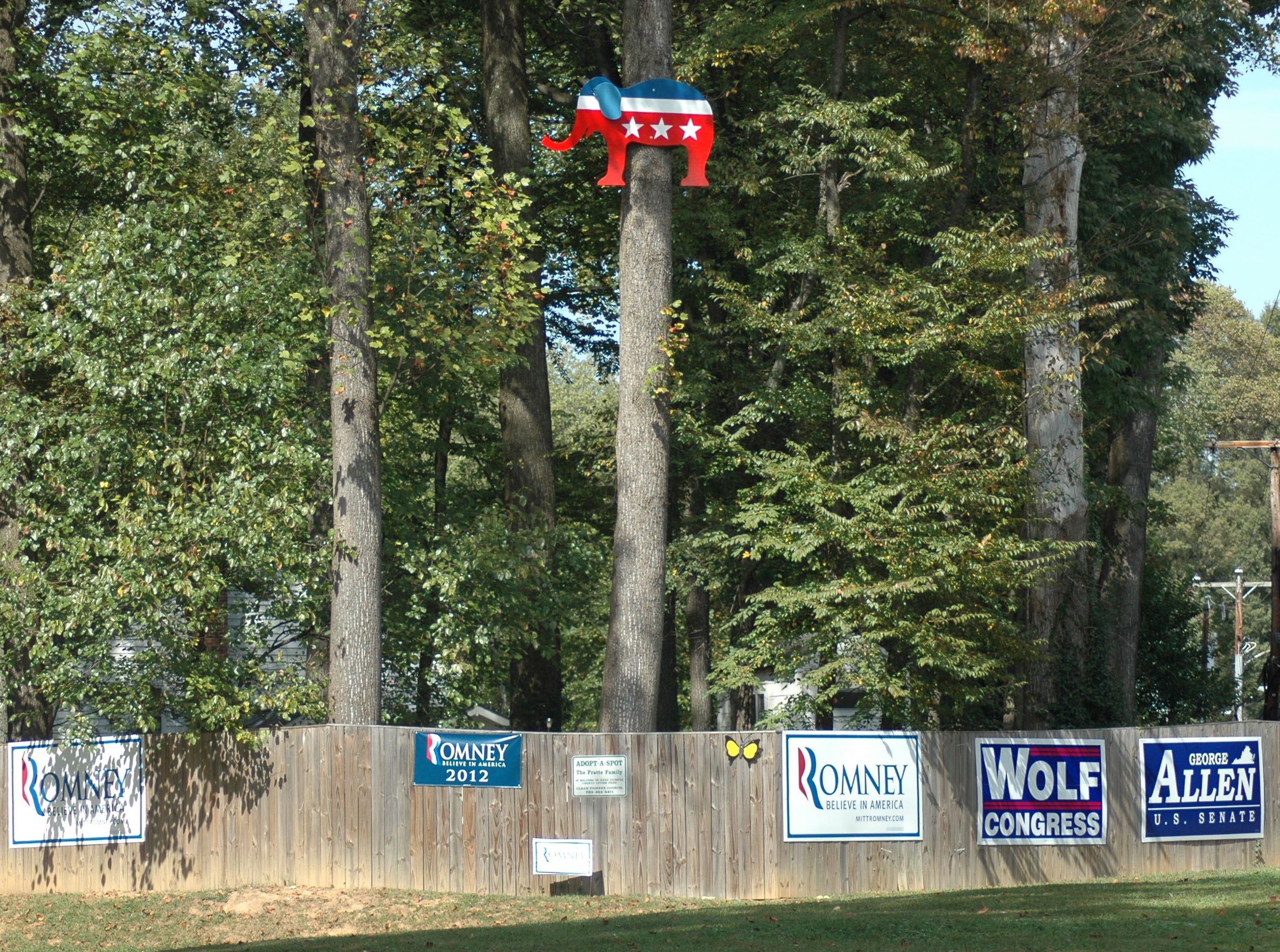
Turn on the radio for a few minutes, and the odds are high you will hear a political advertisement or two. Open your mailbox, and there’s probably a pamphlet, brochure, or fundraising appeal from any of the campaigns. Lawn signs are starting to proliferate in the neighbourhood, although the “battle of the lawns” hasn’t really begun yet this far from November 6. It is fascinating to observe neighbours revealing their political colours with their choice of lawn signs. I’ve been playing a guessing game with myself, trying to anticipate who supports whom. The lawns of those living at prominent junctions are obviously especially coveted.

The “ground game” in Virginia is particularly impressive. Both campaigns have opened dozens of field offices here, and have signed up swarms of volunteers to go door to door to solicit interest, canvass support, and remind folk to vote. People from both presidential campaigns have stopped by our house to chat, check whether we are registered to vote, and of course try to glean how our household votes. Given that I’m not an American and thus of course not eligible to vote, conversations with me end quite quickly.

We’ve received phone calls from both campaigns, some being automated “robocalls”, but also a couple from “real people” who have left messages, requesting our participation. My favourite anecdote with one of these automated calls stems from late in the 2000 presidential election when we were living in Seattle. A recorded message on our answering machine one day was from Robert Redford! Redford had “called” in support of environmentalist Al Gore. I enjoyed listening to his three-minute message about saving the earth and how Gore was the man for the task. My husband teased me as it admittedly took a few days for me to delete the message. I’m wondering who may call our home this time round. George Clooney? Clint Eastwood?

Another area of contest is the car. Bumper stickers and car magnets proliferate. The “doggy wars” are particularly active on the back of people’s cars, given Romney’s noteworthy strapping of the family’s dog (in its kennel) to the top of their car one family holiday years ago. Subsequently, Obama allowed a photograph of him with Bo, the Obama family’s dog, to be taken inside the presidential limousine. Democrats are delighting in displaying “I Ride Inside” bumper stickers, a product from “DogsAgainstRomney”.

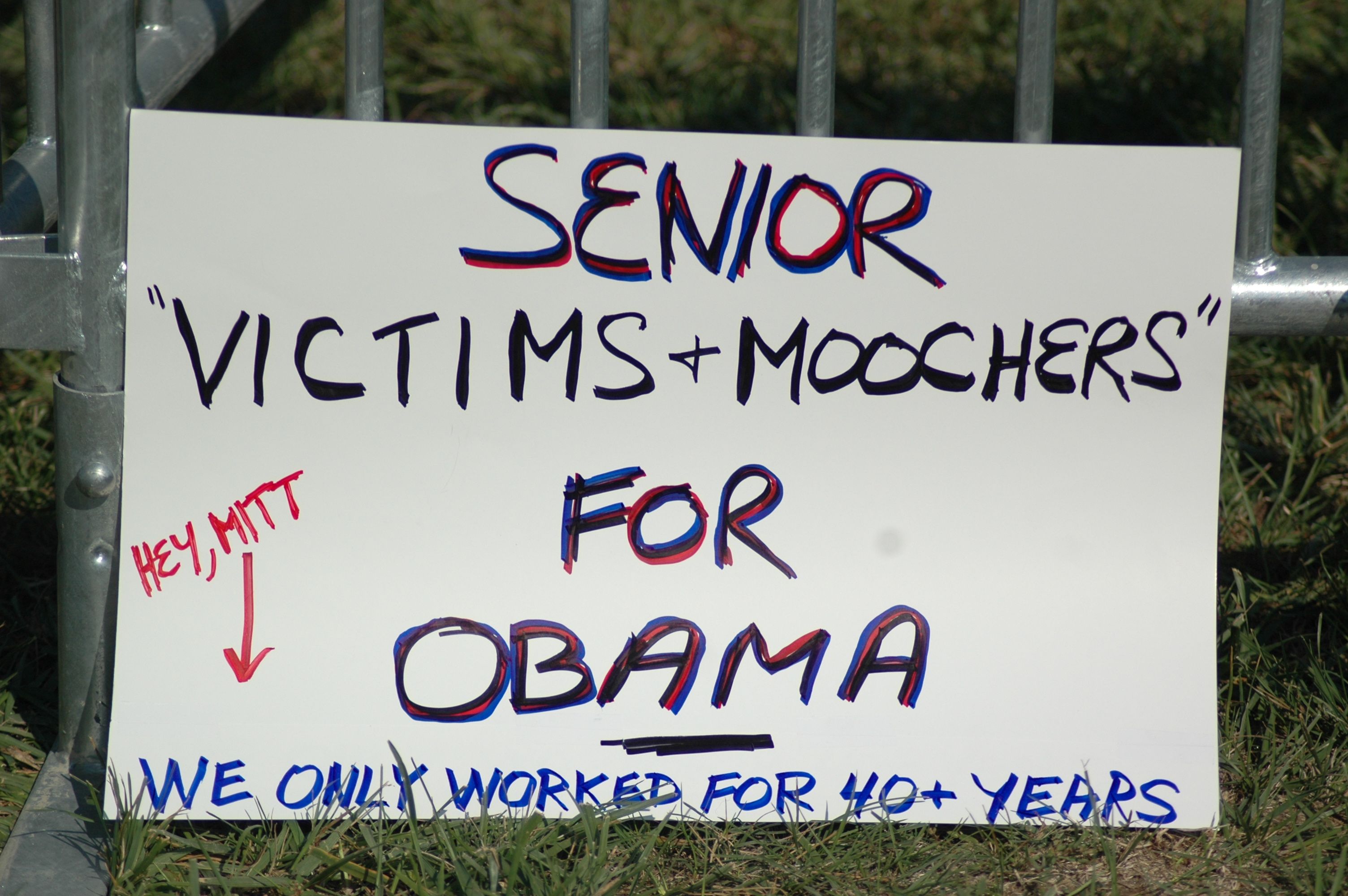
Other moments from the campaign have also already been absorbed into popular culture. An empty chair will, for example, never be the same again. And the surreptitiously made video of Romney damagingly disparaging 47 percent of the American public as people “who are dependent upon government, who believe they are victims, who believe the government has a responsibility to take care of them, who believe they are entitled to health care, to food, to housing, you name it” has galvanized Democratic t-shirt and poster makers, and provided fodder for some of their best material.

When we look back at the 2012 campaign, I believe the disclosure of these comments from Romney will be seen as the turning point in the campaign, the moment when he lost his bid to succeed Obama. These unguarded comments revealed Romney’s true disposition, showing that he really doesn’t understand how America works, if you’ll excuse the pun, and revealing the extent of his detachment from the lives of regular Americans. This candid speech validated the caricature of Romney that relentless Democratic attack ads suggested all summer long.

The unceasing demand for exposure to the candidates in a U.S. presidential campaign creates the chance for such slip-ups, especially when candidates are trawling for money. And more character revelations may yet come. There is, after all, still over a month to go until the votes are in.

Yes, the campaign is arduous and—especially this year, after the U.S. Supreme Court’s Citizens United decision permitting unlimited corporate donations to campaigns—an atrociously extravagant way for people to choose their government. But there is no other purposeful spectacle quite like it, anywhere in the world. Viva democracy.

Update on October 4, 2012: The spectacle isn’t over, folks! After last night’s first presidential debate, it’s once again a real race. Romney’s campaign has bounced back from the debacle over the “47 percent” remarks with him delivering a strong, impassioned debate performance. While debating solidly, President Obama seemed under-prepared. Romney was too aggressive at times, I felt, and part of Obama’s demeanour suggested to me that, after four years in the presidential bubble, he wasn’t used to being spoken to without deference. Last night was really a celebration of democracy though. Imagine South African President Jacob Zuma having to defend his government’s policies for 90 minutes in a similar forum with Helen Zille? Or China’s leader-in-waiting Xi Jinping being exposed to 90 minutes of back-and forth with a seasoned domestic critic of China’s current economic policies?

The eating is exotic and good!

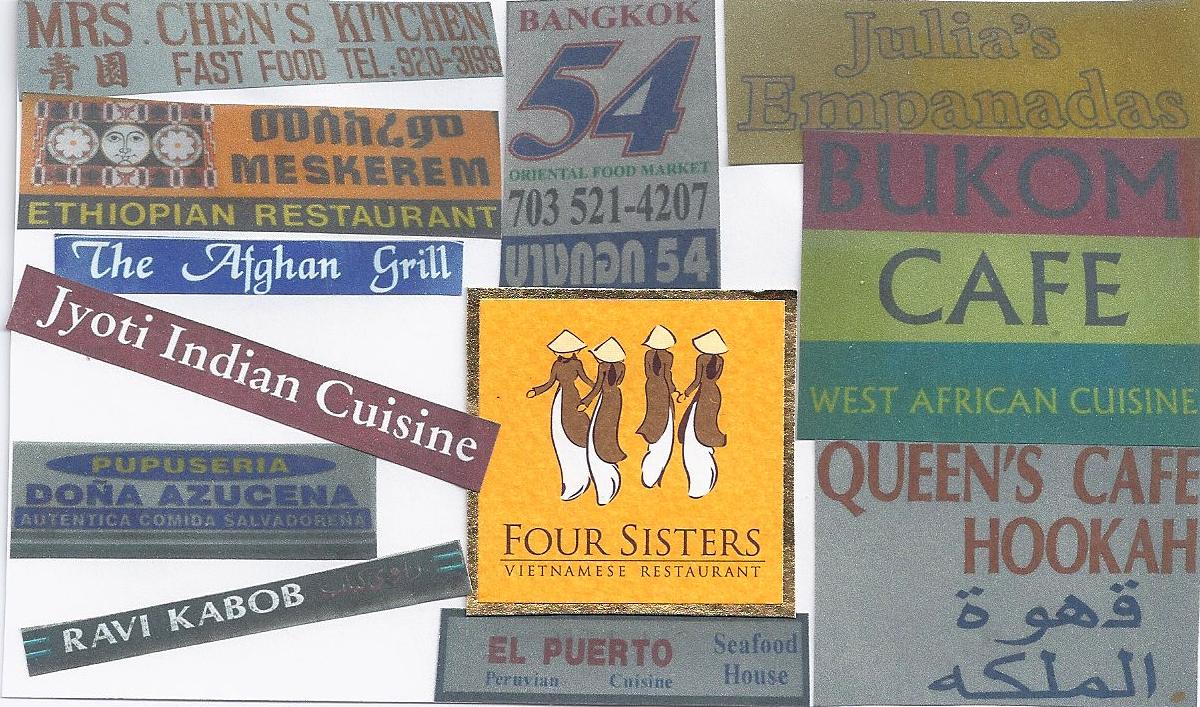
Given the wide range of popular ethnic restaurants in the greater D.C. metro area, you might think the path to Washington policy makers is through their stomachs. Enjoying the available ethnic cuisines is one of the many pleasures of living in this city.

The range and quality of eating experiences, plus the variety of cultural offerings, reflect Washington’s transformation into a sophisticated, global city from its small-town, swampy, Southern roots. The presence of so many foreigners, thanks to the diplomatic missions and international organizations based in the city, adds too to its cosmopolitan appeal and flair. Washington is not, however, on the mega-city scale of either New York or London: The 2010 census estimated the greater Washington metropolitan area to have a population of around 5 and a half million; the District of Columbia itself is just over half a million.

The diversity of restaurants and eating options in Washington really reflects the waves of immigrants who have ended up here. The archetype immigrant to the United States arrives and starts a small business. More often than not, this business is a restaurant that serves food from back home. Or it may be a supermarket specializing in items from that particular region of the world. It might also be a food truck, a “restaurant on wheels” that sells a limited selection of already prepared food, often with a clear ethnic identity.

Running a restaurant that serves native food is usually the preserve of newest immigrants. It is typically the first step on the ladder toward achieving the fabled “American dream”. And it is certainly not the last.

It is also not without contradictions. When Ethiopia suffered devastating famine and traumatic internal displacement of people in the early and mid-1980s, there was also an influx of Ethiopians to the D.C. area. Many started restaurants. I was a graduate student in Washington at that time, and I recall how dining at Ethiopian restaurants was the rage then, largely because of the cuisine’s novelty. Meanwhile people in Ethiopia were struggling to feed themselves.

The many foreign specialty supermarkets make for great browsing. All sorts of ingredients can be found, some familiar, others mysterious and obscure. Like supermarkets the world over, most American supermarkets have “international” sections where one can easily buy kitchen cupboard standards like Japanese soy sauce or Thai sweet chili sauce. The joy of the foreign delicatessens is in finding a particular ingredient that facilitates the making of a much-loved-but-rarely-eaten dish, or one that begs a cooking experiment.

Not all immigrants start off trying to create new lives for themselves and their families with a family-run restaurant, a food truck, or a specialty supermarket. In Northern Virginia, it seems that Korean and Mongolian immigrants have cornered the dry cleaning business. I am amazed at how many Africans—from Ethiopia, Guinea, Kenya, and Sierra Leone—are nursing assistants in area hospitals and nursing homes. The other stereotypical job for newly arrived immigrants the world over is the taxi business. Certainly, Washington has a preponderance of Ethiopian, Indian, Nigerian, and Pakistani cab drivers.

Neighbourhood enclaves of immigrants from particular countries are very fluid and can change quickly. For example, as the area east of The White House has gentrified, the restaurants and shops that comprised “Chinatown” have been pushed out to a suburb of Maryland. A strip of Vietnamese restaurants in Arlington, Northern Virginia, formerly had the informal moniker, the “Ho Chi Minh Trail”. Sadly, these restaurants from the 1980s and 1990s have been displaced as rents have risen. Yet, most of the immigrants who ran those restaurants have probably graduated from running restaurants and been absorbed into American society.

And this is the key observation: The ethnic restaurant business is a multi-generation enterprise. The newest immigrants to the United States often start the restaurants. They don’t speak English and are willing to work hard for long hours for small financial reward. Yet their children, who will have worked in the family restaurant growing up, often become professionals, such as teachers, doctors, and lawyers, and fully part of mainstream American society—thereby fulfilling the “American dream”.

What fencing says about you


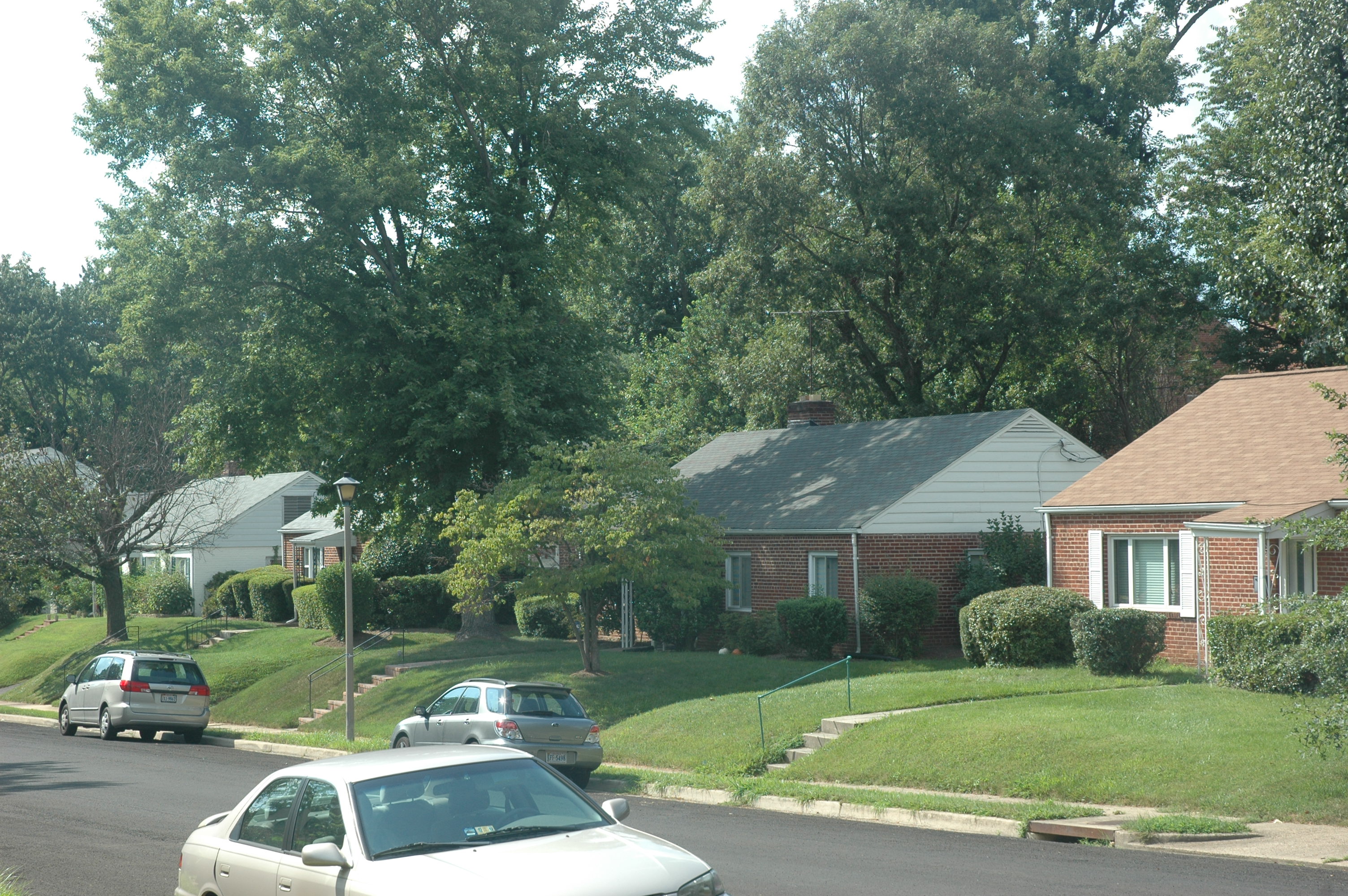
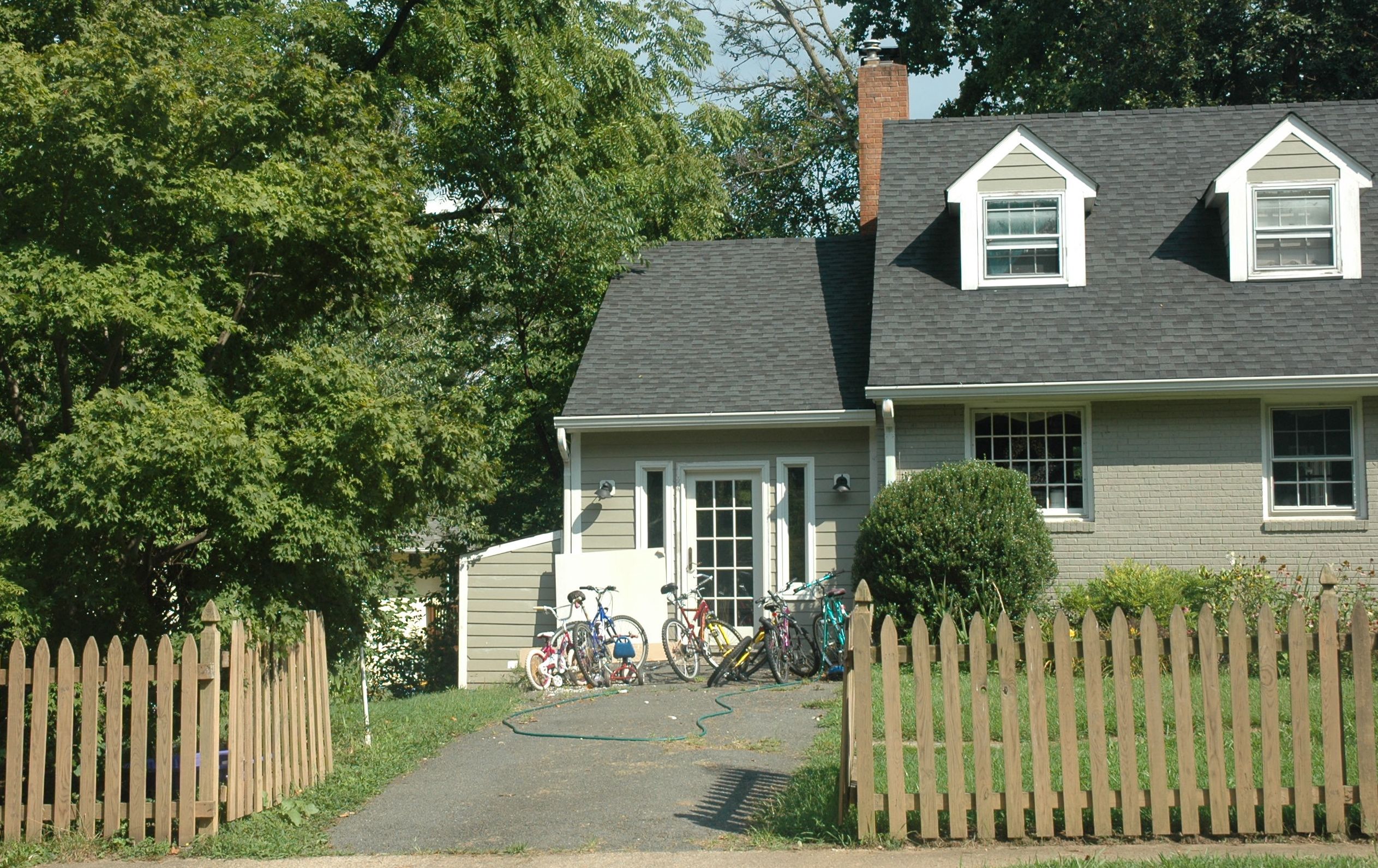
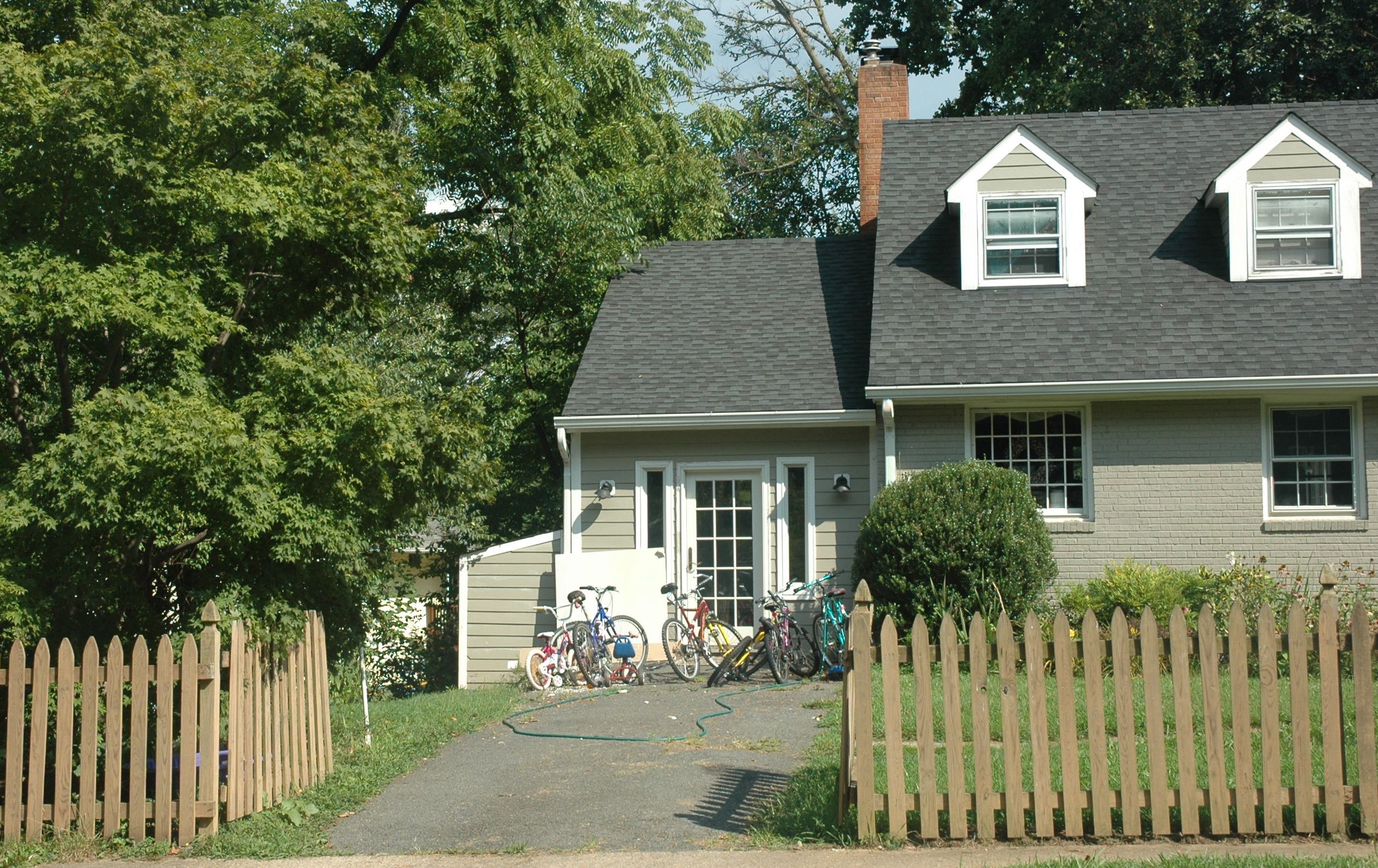
The general lack of fences or any kind of barrier between suburban American homes is breathtaking. After living in Johannesburg, where gravity-defying tall walls with razor wire, broken glass, and electrical wiring atop are the rule, this aspect of life in American middle-class suburbia is an amazing revelation.

When fences do exist, they are usually more decorative than obstacles to passage. If present, their function is largely to delineate property lines. Fences may also provide privacy if one lives on a busy road or junction, but this is atypical. Indeed, neighbours can frown upon fences being erected. We know of someone who still resents previous neighbours of hers for putting up a fence to keep in their dogs. Instead of fences for this purpose, many use “invisible fences” that administer gentle shocks when their collar-wearing pets meander beyond a certain perimeter.

No burglar bars on windows are another joy of middle-class suburban life here. Those residing in American cities are more likely to have such essentials of Johannesburg city or suburban life (and most other South African population centers, for that matter). But such home protection measures are unusual in the middle-class suburbs here. Having an alarm system—and then using it on a regular basis—is not the suburban norm here either. I’m learning too that some do not even regularly lock up their homes when no one is present. Wow!

The gathering and releasing of crime statistics to the public is controversial in South Africa. Released figures reflect broad trends in crime categories, and are viewed skeptically as inaccurate and misleading. In contrast, the extent of detail in the notification of criminal activity here in Northern Virginia fascinates and stuns me. From one local newspaper, I learnt that a backpack was stolen from a parked car on our block last week, while two streets away, tools were taken from an open garage. The neighbourhood papers also reveal titillating details like an after-hours argument between an employer and employee at a nearby restaurant that resulted in police being summoned. Imagine details such as these, of seemingly petty incidents, making it into South African crime reports…

My personal favourite anecdote about the remarkable rarity of crime in our local area comes from the afternoon my son called from school to say that the school bus could not drive into the neighbourhood because of police activity. It turns out someone had seen a person throwing something into a basement window three houses over and had reported this to the police. Five or so police cars drove into the suburb, and a police helicopter hovered overhead, to apprehend this criminal. We learned later that the window breaker was in fact the homeowner who had locked himself out of his own home! I was totally impressed at the swift response and speechless at its overwhelming nature.

In a sad reflection of people’s desperation in the strained economy, bank robberies occur with unexpected frequency in the area. However, the robbers are typically apprehended quickly.

I should reiterate that what I’m describing here is very much an American middle-class suburban experience. Life in working-class suburbs and in cities themselves is profoundly different. The United States is hardly without crime, it has appallingly high gun ownership, and it has one of the highest incarceration rates in the world. But it also has incredible policing. U.S. police are very well trained, and they have remarkably sophisticated technology at their disposal. Life for traditional criminals must be very difficult indeed.

So middle-class Americans in the suburbs surrounding Washington, D.C., are fortunate with low overall rates of criminal activity. Yet I find a general skittishness and nervousness about any possible untoward or unexpected occurrence. In my experience, Americans in this part of Northern Virginia show a great sensitivity and suspiciousness about irregular behaviour. I don’t know if this can be attributed to our proximity to Washington and general security consciousness in the post–9/11 world.

I had a revealing personal experience of this a while ago: My visit to a self-service petrol or “gas” station to fill the car with petrol went a little awry, and I came away having spilt a little petrol on my trousers. My next stop was the post office. I did not realize how much I smelled of petrol, so I blithely stepped into the post office and joined the queue. A hushed silence came upon the others in line, with everyone anxiously looking around them. Two women notably dashed out of the store. Another softly ventured, “Can you smell that? What is that?” Others murmured their concern. I then realized the smell emanating from the spill was the source of the problem and said loudly, “No, it’s me! I spilt some petrol on myself!” Nervous laughter broke out, with a couple of people reassuringly offering that they too had similar incidents with air bubbles when pumping petrol. Most curiously, the envelope I mailed that day never arrived at its destination. I’ve often wondered if it was sidelined because it too may have smelled suspicious.

The free-flowing nature of American society masks many issues. The lack of fences is part of the narrative of openness and the expectation of transparency in the American soul. Minimal fencing also shows the enormous respect Americans have for private property. The present tax structure strongly encourages Americans to buy homes, so those fortunate enough to own their homes greatly value them. And they very much respect others’ property too.

A sporting chance

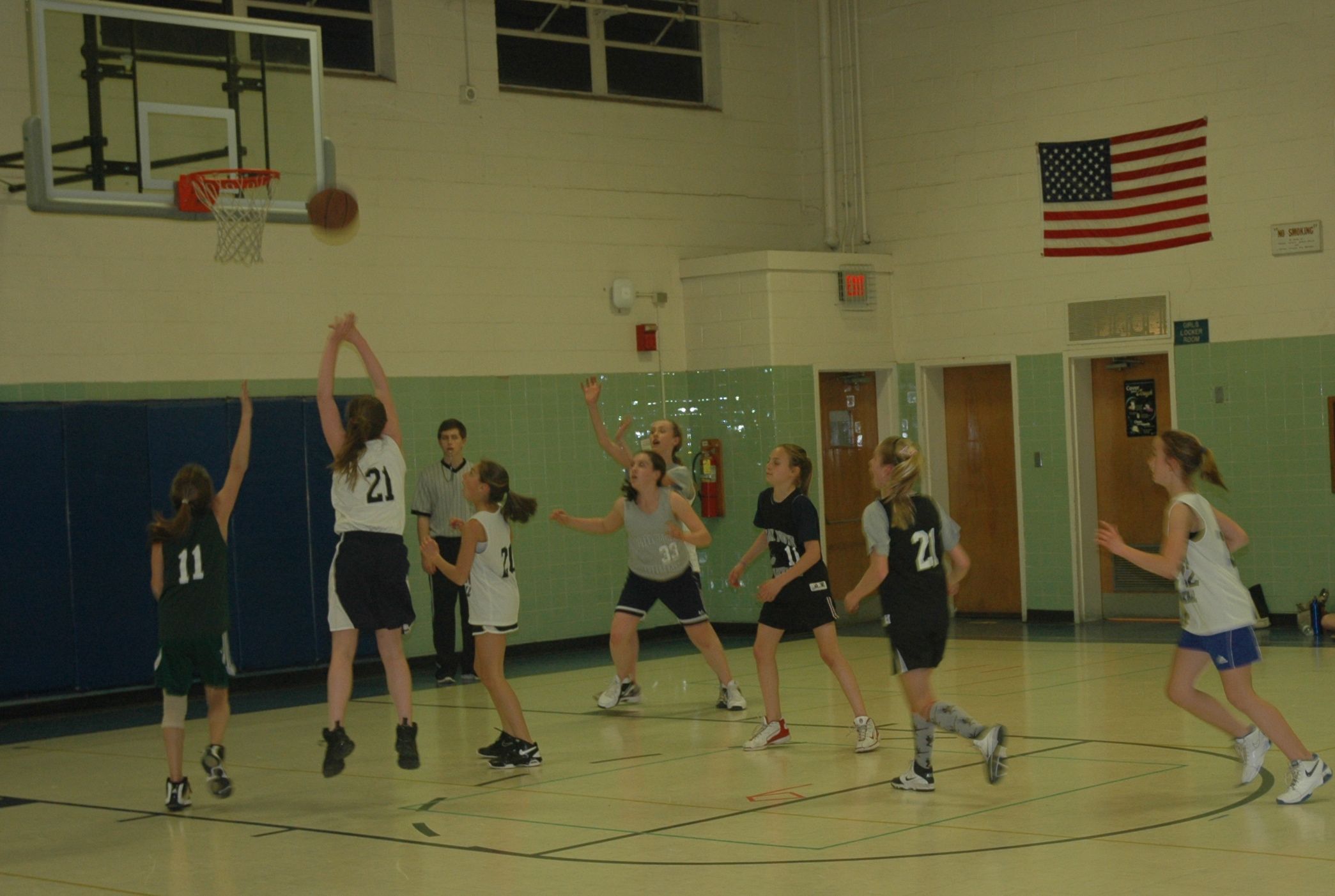
Competitive inter-school sport occurs only at the high-school level in a typical American school district. This realisation took me by complete surprise when moving here twenty months ago with a teenager and a near teen. I had assumed that, like in South Africa, inter-school sports started at the elementary level and continued through high school. It turns out that local clubs nurture youth athletic talent and provide formative competitive sports opportunities in the United States, not primary and middle schools.

Americans are as fanatical about sport as any others. Presently, the American sporting world is preoccupied with “March Madness”, the annual elimination competitions of both men’s and women’s college basketball that take place in March. For both genders, “March Madness” begins with 64 teams, continues with 32, then the “Sweet Sixteen”, the “Elite Eight”, the “Final Four”, and then the championship game.

President Barack Obama’s choice of teams most likely to succeed in each “bracket” of the competition was canvassed and has been widely reported. Obama also whisked off British Prime Minister David Cameron to Ohio last week to attend a game during the latter’s official visit to the United States—and apparently taught Cameron about the game throughout.

The scale of the tournament is huge, in terms of commercial value and TV viewership. Fans’ university and regional loyalties come to the fore, with many office pools being created and wagers won and lost.

For the athletes, a successful collegiate sporting career also means an entrée to professional sports. American basketball legends such as Larry Bird, Patrick Ewing, Magic Johnson, and Michael Jordan became household names through their exploits as college players before playing professionally.

A revealing aspect for me is how the women’s collegiate competition is as highly valued as the men’s. This is thanks to “Title IX”, the civil rights law President Richard Nixon signed in 1972 that forbids discriminating between genders in education if that educational institution receives direct or indirect federal aid. Although sport was not explicitly mentioned in the legislation, Title IX’s biggest impact has unquestionably been on high school and collegiate athletics for women.

Before generalising about how local clubs foster interest in sport and develop talent, I should note that physical education is offered during the school day at American elementary and middle schools, but in a very low-key way when compared to school sport in South Africa.

For sport-oriented young Americans, neighbourhood clubs try to offer different levels of competition. A “select” or “travel” league would be geared to the really talented, and these elite teams literally travel around a region to compete against each other. A “house” league would offer general participation, although “A” and “B” leagues may be differentiated. “Try outs” may also be required to generate teams of relatively balanced ability. House teams typically compete against each other in the local area. A “development” league might be offered for the beginner youngest age groups.

These clubs are all about partnerships. Local school facilities are typically used for weekday practices after school hours and weekend games. So, for example, the local basketball club, the county school district, and the PTA of my daughter’s school teamed up to cover the cost of replacing the floor of the school’s gym.

But the key way in which these clubs reflect the best of a community working together is in the fact that they are volunteer dependent. Parent volunteers typically provide most of the coaching, although high school and college students coach too. A remarkable commitment is asked of these volunteer coaches: weekly practices and weekend games for a full season. Having observed parent coaches for the sports in which my two children have participated over the last twenty months, it is very clear that most coaches greatly enjoy the experience, do a simply terrific job, and really give their heart-and-soul to guiding the children in their care. One can also observe some taking it far too seriously, with some behaving as if they were coaching a high-powered college or professional team…

In an aside, in addition to being an avid follower of the game and a keen “hoops” player himself, President Obama is also known to attend his daughters’ basketball league games and sometimes step up to coach temporarily. How he must love such moments—the joy of feeling like a “regular” suburban dad!

Participation in these clubs requires a nominal fee, to cover the cost of officiating and the team shirt. Scholarships are always offered for those who would like to participate but do not have the means to do so.

When games are played, umpires or referees are usually provided, and they are paid a token sum. The refs are usually adults, but many times they are not. Providing teenagers with the opportunity to learn how to officiate is another great role these clubs play. For some American teenagers, officiating club games might be a first job.

Certainly, there are also many opportunities for young Americans to have private and more individualised coaching in the different sports. The cost of such training keeps it the preserve of the few—those who can afford it and those who are uniquely gifted. The majority of Americans learn their sport through local clubs.

Pious politics


Rick Santorum, one of the conservative Republicans vying to be the GOP presidential nominee, has hurt his chances of being selected by espousing views on religion that alienate many Americans. In contrast, a recent civic exercise for 12-year-olds illustrated a positive approach to teaching social and moral values.

Volunteering at an “Ethics Day” for 12-year-old school children turned out to be a rewarding way to spend a morning. A local, secular, civil-society coalition organized the half-day event; a nearby Jewish temple provided the facilities; and all sixth graders from two area elementary schools took a break from their regular school day to participate. The point of the exercise was to stress how ethical choices determine the kind of schools, communities, and world in which we live. Ethical dilemmas were presented for discussion, and the challenge of reconciling what one could do in certain situations, what one would do, and what one should do was highlighted.

Every religion, faith, and creed could endorse the universalisms that underpinned the deliberations. It was agreed that integrity comes from living basic values like honesty, trust, fairness, justice, compassion, responsibility, and respect. The tenor of the presentations and discussions was practical and respectful, yet also idealistic and inspirational. The approach was non-theological, nondenominational, and non-divisive. It showed how moral conduct and civic duty can be inspired in a pluralistic, diverse society in a way that is sensitive and doesn’t cause offense—and supplements moral and religious guidance provided through family and private faith.

Rick Santorum and his evangelical supporters would likely find the formula followed at “Ethics Day” to be wanting. He recently said he didn’t “believe in an America where the separation of church and state is absolute”, and he accused President Barack Obama of “advancing a phony theology, not a theology based on the Bible”.

In what has effectively become a two-man race between former Massachusetts Governor Mitt Romney and himself, Santorum’s elevation of divisive social wedge issues is also clever politics. Part of Santorum’s recent rhetoric is unquestionably belief—he is a deeply religious man. Part of it is also deliberate strategy. Some of the continued lack of enthusiasm for Romney among the core of the Republican Party relates to mistrust of his Mormonism and his reluctance to speak about his faith and how it informs who he is. By speaking so forcefully about his own faith and views, the Catholic Santorum is intentionally making this contrast with Romney. While Republican voters are also unsure whether Romney is a real conservative, Santorum assures all he is a “full-spectrum” conservative.

The politics surrounding the presidential campaign also explains why Romney, Santorum, and Newt Gingrich, the other conservative Republic presidential hopeful, berated President Obama for apologizing to Afghan President Hamid Karzai for the disrespectful burning of the Koran at the U.S. airbase outside Kabul. Obama’s apology had struck me as totally appropriate and, in fact, essential after the inflammatory treatment, albeit not intentioned, of Islam’s holy book.

This overreach and heated rhetoric on social and religious matters has, I think, backfired for Santorum. He already has the evangelical vote sown up—although there is still some dwindling support for Gingrich—so continuing to hammer away on these themes is counter productive for his presidential ambitions. The brighter prospects of the U.S. economy also partly explains this pivot from focusing on the economy, but highlighting religion in the public sphere and social issues is not a winning strategy for Republicans for the general election. Santorum, a former senator from Pennsylvania, lost his 2006 senatorial reelection campaign by 18 percentage points largely due to his views on faith and gay rights.

The longer the divisive Republican nomination battle continues, the less likely Republicans will unify for the November election against President Obama, and the greater the possibility of a third candidate emerging to contest the election—which would split the conservative vote.

A protest poster at a recent Santorum rally said it all to me: “America is a democracy, not a theocracy”. Long live separation of church and state.

Christmas with American characteristics

Around the globe, people decorate this season. The retail sector the world over leaps at the excuse to adorn shops at this time of year, and American retailers are, of course, no exception. Even in “Communist” China and Shinto Japan, where most do not celebrate Christmas, shops are now brightly decorated. In Europe, lavishly decorated pedestrian shopping streets and traditional Christmas markets are seasonal pleasures. Some of the littlest towns or dorpies in South Africa have the fanciest Christmas light shows down their main streets.

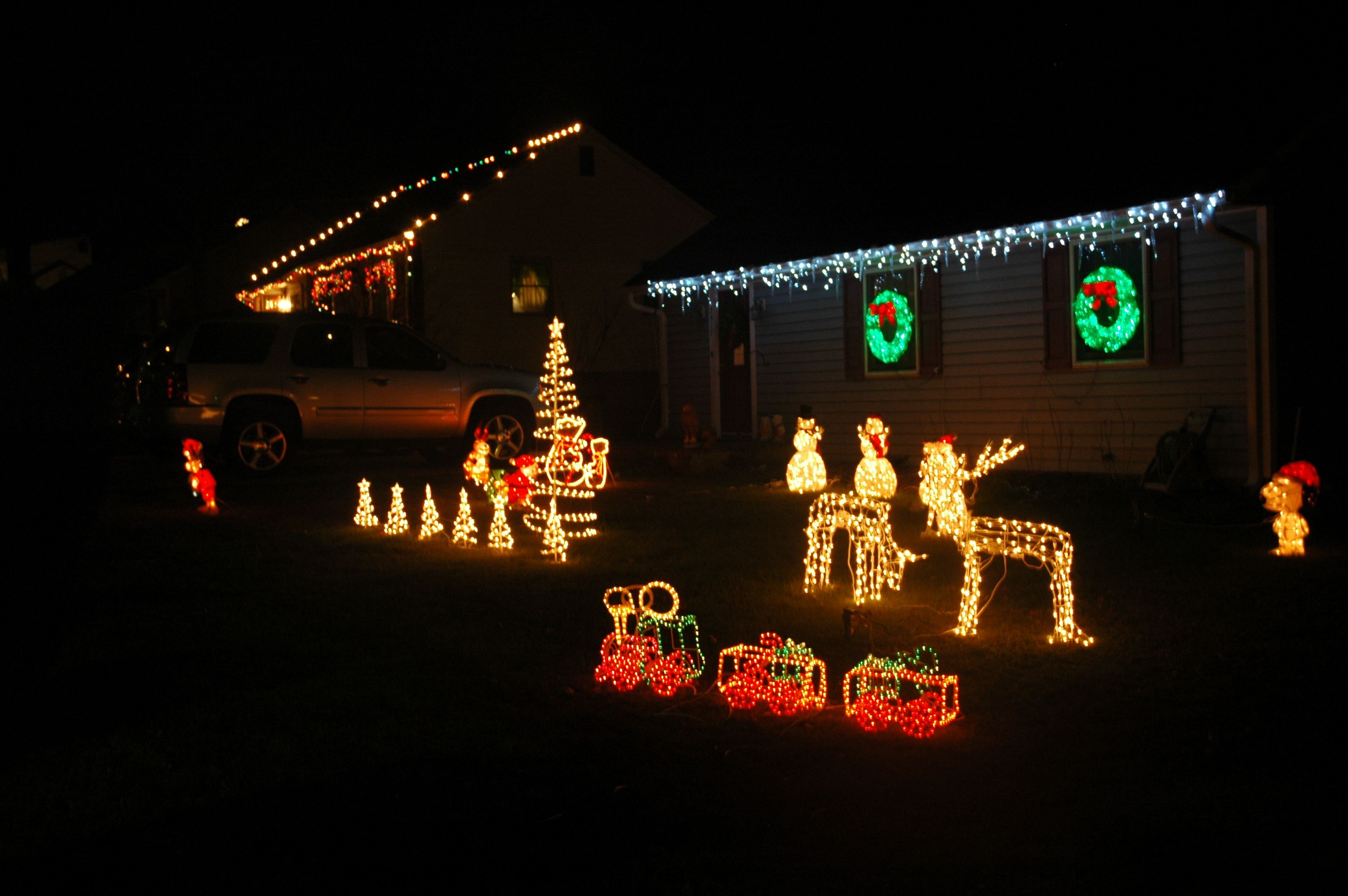
The singularly American aspect to this decorating frenzy, I think, is the way in which Americans adorn the outside of their homes. While many in countries celebrating Christmas decorate inside their homes, nowhere in the world does one experience such fervour in decorating the exteriors of houses. Here in the United States, if you celebrate Christmas—and, sure, many do not—the chances are you will decorate the outside of your home. Working class, middle class, wealthy, religious, secular, elderly, young, you name it. If you celebrate Christmas here, you decorate outside. Some of it is very creative, tasteful, and discreet; some of it just too much and outrageously over the top. But, hey, it’s Christmas in America!

The paraphernalia for this outdoor decorating is readily available. Thanks to cheap Chinese imports, strings of LED lights—white! multicoloured! on green wire! on white wire!—can be purchased very reasonably. And one can connect lots of these together to create a quite dazzling effect; a box of lights notes that a maximum of 43 strings can be linked together. Another favourite is a type of “net” with white or multicoloured lights, which can be draped over bushes or railings. Every year, there are new lights, gimmicks, or other innovations on offer (clever Chinese), so you can always expand your collection. All this illumination gives communal cheer on these chilly winter nights when it becomes dark so early. Yet spiked electricity bills should give pause to those who overdo it, and overall increased energy consumption certainly gives this dimension to the season here an environmental cost.

One of the weirder manifestations of this decorating obsession is how some even jazz up their cars. Wreaths on the bonnets of cars are common. The one that always makes me giggle is the reindeer thing: A pair of “antlers” emerging from opposite side windows, with a red “nose” on the bonnet. Seriously!

European bakers are frantically busy at this time of year. The Germans, Swiss, Belgians, Dutch, Scandinavians all indulge in wonderful gingerbread, almond, cinnamon, shortbread, anise, and chocolate cookies around Christmas. Americans are also munching yummy cookies in December, with typical flavours including apple, pumpkin, oatmeal, cranberry, coconut, peanut, and chocolate.

The American twist on cookies at Christmas is the “cookie exchange”. Trust ever-practical Americans. The idea is that each person arrives with, say, three dozen of their favourite home-baked cookies, and then departs with the same amount of cookies chosen from the array of those others contributed. A key dimension, even etiquette, to this ritual is that the cookies have to be something over which one has taken time and trouble. It would be bad form to participate in a cookie exchange with goodies that involved little effort or were purchased, even if very special.

Giving is an essential part of Christmas. Americans are very generous people; indeed, they do the giving part of Christmas exceedingly well. In these depressed economic times, needs have increased everywhere, and one is inundated with requests for assistance. One’s mailbox is filled with requests for help, newspapers and churches list volunteer opportunities at nearby soup kitchens and charities, schools ask for assistance in providing gifts for needy children and constantly run food drives for local food pantries. The focus, as it should be at Christmas, is on giving. Yes, cynics note, charitable giving is tax deductible, and the tax year ends soon. But it’s the spirit of the giving—often anonymous—that illustrates my point:

Kmart announced that secret Samaritans in stores in Iowa, Indiana, Michigan, Montana, and Nebraska had paid off many layaway accounts on toys and children’s clothing, leaving only a few dollars or cents so the items remained in the system. An Indianapolis woman paid off about 50 people’s layaway orders and handed out $50 bills as she left the store—in memory of her husband who had just passed. For the fifth year in a row, a Salvation Army collection kettle outside a Clarksville, Tennessee supermarket has had a krugerrand placed into it. A Salvation Army collection point near Harrisburg, PA, announced recently that it too had received a krugerrand. Cynics may suspect drug smugglers laundering their ill-gotten gains, or former criminals trying to make good, but I’m not so sure.

The materialism of the receiving part of the American Christmas experience can be repulsive and excessive, although the capacity of that great engine of the global economy—the U.S. consumer—is greatly diminished in recent years. Numbers from “Black Friday” (the shopping day after Thanksgiving when stores traditionally move into the black for the year) and “Cyber Monday” (the day for deals on electronics, especially for online purchasing) were up this year from last. Obviously, it’s too early to tell if the Christmas shopping season overall has been successful for retailers, but the frequency with which one sees UPS brown trucks and FedEx Home Delivery vehicles on the road suggests that people have been shopping hard. A middle-class suburban detail that amazes this South African is how parcels are dropped off by front doors and then left there, awaiting collection when people return home at the end of the day. Such parcels would quickly disappear in middle-class suburban Johannesburg or Cape Town–and perhaps not fare too well either in most American towns or inner city neighbourhoods.

Yet the most noteworthy aspect of Christmas in America is high attendance of church services, a phenomenon that is well documented elsewhere, and one that is categorically not true of all societies celebrating Christmas. Whether you go to church or choose not to go this Christmas, a very merry Christmas to all!