Pious politics


Rick Santorum, one of the conservative Republicans vying to be the GOP presidential nominee, has hurt his chances of being selected by espousing views on religion that alienate many Americans. In contrast, a recent civic exercise for 12-year-olds illustrated a positive approach to teaching social and moral values.

Volunteering at an “Ethics Day” for 12-year-old school children turned out to be a rewarding way to spend a morning. A local, secular, civil-society coalition organized the half-day event; a nearby Jewish temple provided the facilities; and all sixth graders from two area elementary schools took a break from their regular school day to participate. The point of the exercise was to stress how ethical choices determine the kind of schools, communities, and world in which we live. Ethical dilemmas were presented for discussion, and the challenge of reconciling what one could do in certain situations, what one would do, and what one should do was highlighted.

Every religion, faith, and creed could endorse the universalisms that underpinned the deliberations. It was agreed that integrity comes from living basic values like honesty, trust, fairness, justice, compassion, responsibility, and respect. The tenor of the presentations and discussions was practical and respectful, yet also idealistic and inspirational. The approach was non-theological, nondenominational, and non-divisive. It showed how moral conduct and civic duty can be inspired in a pluralistic, diverse society in a way that is sensitive and doesn’t cause offense—and supplements moral and religious guidance provided through family and private faith.

Rick Santorum and his evangelical supporters would likely find the formula followed at “Ethics Day” to be wanting. He recently said he didn’t “believe in an America where the separation of church and state is absolute”, and he accused President Barack Obama of “advancing a phony theology, not a theology based on the Bible”.

In what has effectively become a two-man race between former Massachusetts Governor Mitt Romney and himself, Santorum’s elevation of divisive social wedge issues is also clever politics. Part of Santorum’s recent rhetoric is unquestionably belief—he is a deeply religious man. Part of it is also deliberate strategy. Some of the continued lack of enthusiasm for Romney among the core of the Republican Party relates to mistrust of his Mormonism and his reluctance to speak about his faith and how it informs who he is. By speaking so forcefully about his own faith and views, the Catholic Santorum is intentionally making this contrast with Romney. While Republican voters are also unsure whether Romney is a real conservative, Santorum assures all he is a “full-spectrum” conservative.

The politics surrounding the presidential campaign also explains why Romney, Santorum, and Newt Gingrich, the other conservative Republic presidential hopeful, berated President Obama for apologizing to Afghan President Hamid Karzai for the disrespectful burning of the Koran at the U.S. airbase outside Kabul. Obama’s apology had struck me as totally appropriate and, in fact, essential after the inflammatory treatment, albeit not intentioned, of Islam’s holy book.

This overreach and heated rhetoric on social and religious matters has, I think, backfired for Santorum. He already has the evangelical vote sown up—although there is still some dwindling support for Gingrich—so continuing to hammer away on these themes is counter productive for his presidential ambitions. The brighter prospects of the U.S. economy also partly explains this pivot from focusing on the economy, but highlighting religion in the public sphere and social issues is not a winning strategy for Republicans for the general election. Santorum, a former senator from Pennsylvania, lost his 2006 senatorial reelection campaign by 18 percentage points largely due to his views on faith and gay rights.

The longer the divisive Republican nomination battle continues, the less likely Republicans will unify for the November election against President Obama, and the greater the possibility of a third candidate emerging to contest the election—which would split the conservative vote.

A protest poster at a recent Santorum rally said it all to me: “America is a democracy, not a theocracy”. Long live separation of church and state.

Unoccupying D.C.

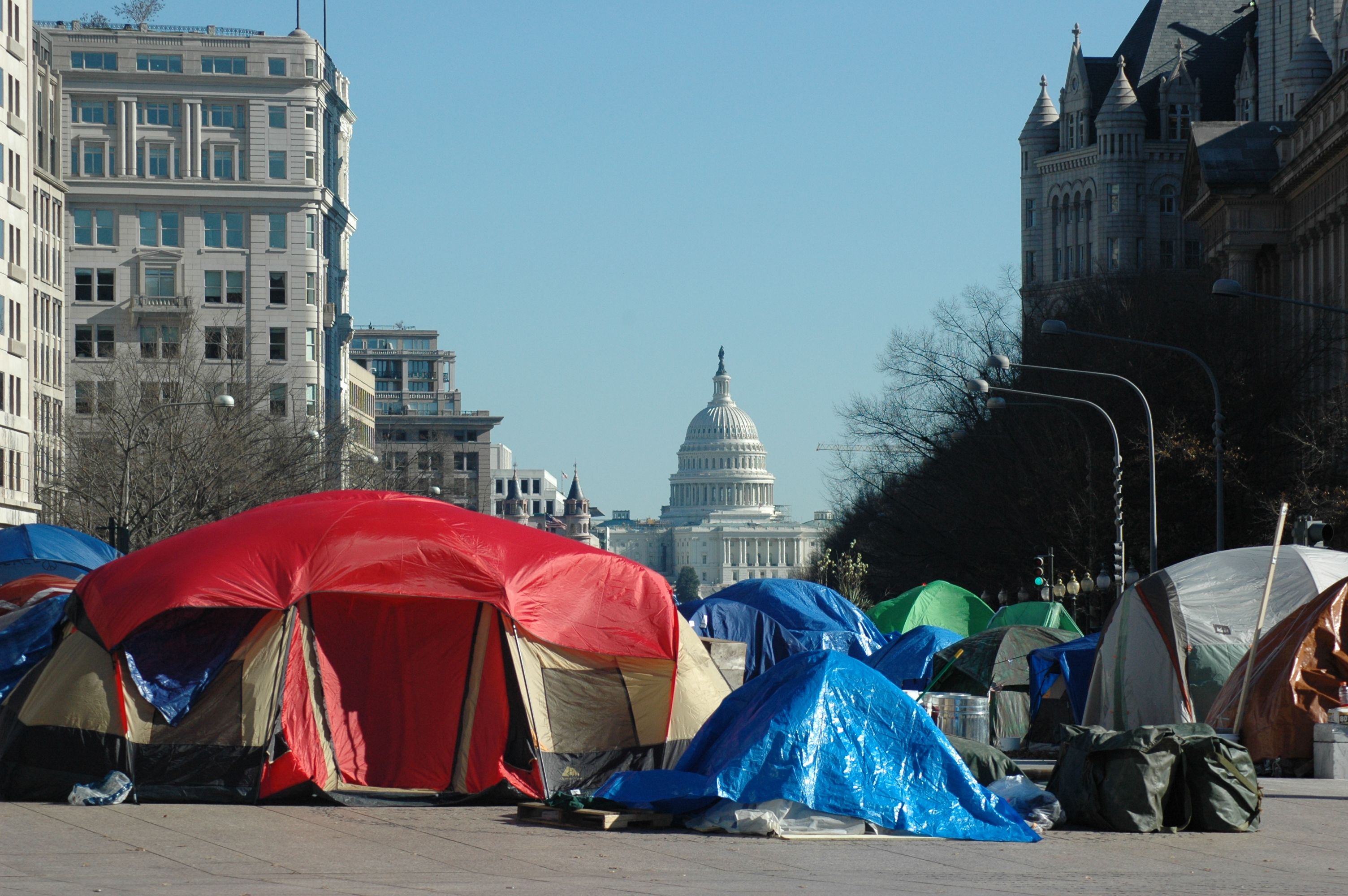
Protesters occupying two downtown Washington, D.C., locations are being told to pack up and leave, and are being forcibly removed—even arrested—if they don’t leave voluntarily. After months of tolerance and inaction, U.S. Park Police have started enforcing the law on no overnight camping in parks.

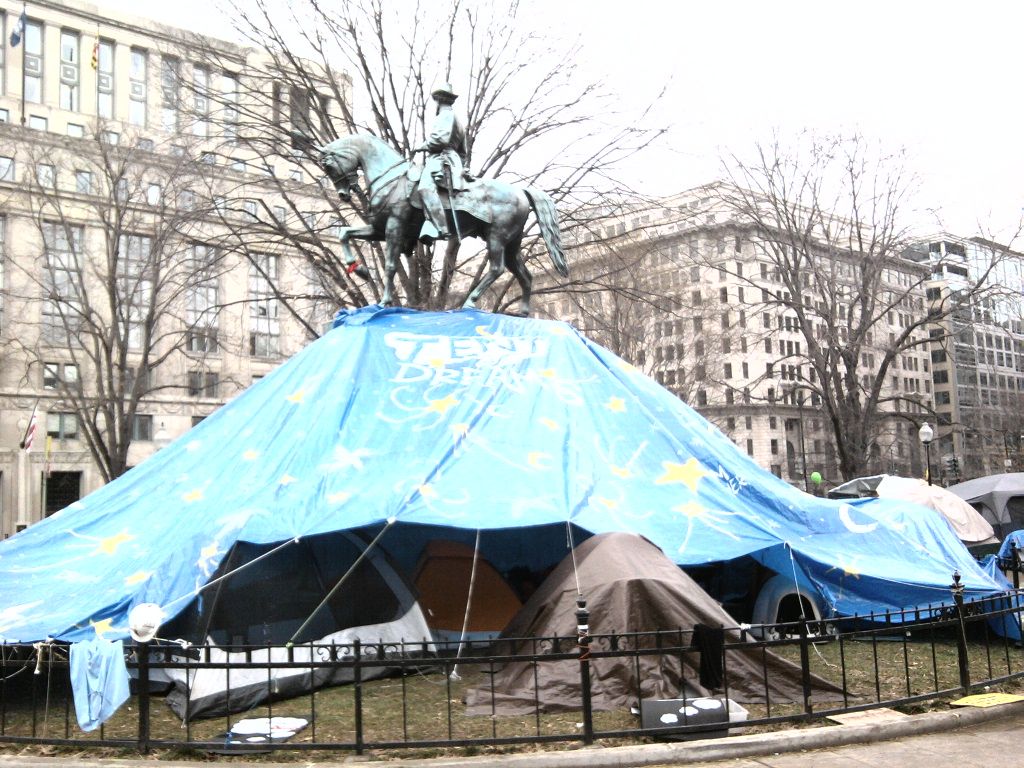
Respecting people’s First Amendment right to freedom of expression from government interference and the concomitant right to peaceful assembly have underpinned acceptance of the occupiers in the two parks at McPherson Square and Freedom Plaza. However, District sanitation officials have been concerned for weeks about deteriorating sanitary conditions, especially at the McPherson camp, with rat sightings becoming commonplace, even during daylight. A congressional committee also started investigating the violation of no nightly camping on federal land. Park police had also been asking occupiers to remove an enormous tarpaulin—the “Tent of Dreams”—that they had erected around the statue of General McPherson, a Civil War hero, in the center of the Square.

Police cleared most of the tent community at McPherson Square yesterday at dawn. As of this afternoon, the remaining stragglers on the one side of the square defiantly maintained they would never leave. At Freedom Plaza, from the volume of police on the plaza and in the immediate area this afternoon, it is appears similar clearing procedures are imminent. The number of tents at Freedom Plaza has certainly decreased in the last days, with campers evidently heeding warnings to pack up and leave. Churches in the District have apparently been offering temporary shelter.

A couple of visits to the two sites in recent days left me with some impressions. The physical squalor of the McPherson camp was impossible to ignore. Nonstop human traffic since the occupation started in early October, coupled with rain, sleet and a little snow, have ensured that the formerly grassy square has become a mushy, gooey mud bath (no wonder occupiers resorted to sleeping on pallets). Paving at the Freedom Plaza site facilitated a less unsanitary environment.

But more than the deterioration of the physical environment, what struck me was how the nature of those now occupying the camps, especially McPherson, changed. The median age of the occupiers definitely increased. Gone are the younger, idealistic, perhaps naïve occupiers of autumn. Those remaining are older, more seasoned activists; some are anarchists and others nihilists. The gentle bearded young man from California with whom I chatted last November as he munched his breakfast in his “tent” of draped clear plastic with its sign proclaiming “Occupy DC is transparent and participatory” seems long gone.

Despite admonitions such as “Cops: Don’t Be Tools of the 1%” seen earlier at McPherson, one could argue that police are doing “Occupy D.C.” a favour by clearing out the camps. This phase of the Occupy movement here in D.C. had run its course. But the occupiers couldn’t back down without losing face. Park police have now given them the way out. It was time anyway for the occupiers to retreat, regroup, consolidate, reassess, and plan new strategies for spring. And now they can do so.

The Occupy movement has unquestionably influenced the national debate. The discussion it provoked on income and social inequality, corporate greed, indebtedness, and unemployment is ongoing. Indeed, its focus on social inequity in the United States and how economic policies benefit the already haves is central in current discourse. President Barack Obama is urging tax reform so that the wealthiest pay more than they have been. He highlights the issue that Warren Buffett brought to the fore—that Buffett’s secretary pays taxes at a higher rate than Buffett himself does. The tax returns of likely Republican presidential nominee Mitt Romney, one of the wealthiest men ever to be running for president, with a net worth estimated to be around $250 million, further underscore this point. Romney is shown to have paid a tax rate of 13,9% in 2010 on capital gains from $20 million in income. Revelations such as this and Romney’s general awkwardness in discussing money, wealth, and poverty should surely galvanize the Occupy movement as its followers deliberate the way forward.

As the Occupy movement in D.C. ends its current phase, perhaps the miracle is that the D.C. camps lasted as long as they did. An unusually mild winter certainly helped. While those in the ski industry have cursed the relative lack of snow, those in Occupy D.C. were grateful.

Update on February 13, 2012: As of this afternoon, McPherson Square and Freedom Plaza still house a few token Occupy D.C. tents.  No sleeping or camping is permitted in these tents. Compliance with Park Police also requires tent flaps always to be open so police can confirm no bedding or personal effects are being kept there. Occupiers are apparently maintaining a constant presence in the parks. I was told that people are sleeping in shifts elsewhere—such as in churches and shelters—and then taking turns keeping vigil 24/7 in the parks. The library tent at McPherson Square still stands, packed tight with books and magazines, but the “OccuTeaHouse” is gone.

Update on February 20, 2012: The Washington Post complements the Park Police for the way they handled the Occupy D.C. protests.

Is Walmart evil?

Retail giant Walmart generates controversy wherever it goes. This is true within the United States—where expansion plans, for example, in Boston are being resisted—or abroad in countries like China, India, or South Africa. So when it was announced last year that Walmart was opening six new stores here in the District of Columbia, up from the four originally planned, the hullaballoo that followed tweaked my interest.

Rural and suburban America is saturated with Walmarts, so the Walmart strategy now is to grow in urban areas, often with smaller “Walmart Express” stores instead of the “big box” stores for which it is better known. The six stores in the District will be a mixture of these, with some stores being part of mixed-use commercial and residential developments.

The District of Columbia government welcomes the entry of Walmart into the city. Mayor Vincent Gray has spoken of approximately 1,800 jobs that will result from the new Walmart stores, about 600 construction jobs, and an estimated $15 million in new tax revenue. He says the new stores will help address the problem of food “deserts”, where communities are underserved with fresh food retail opportunities. Gray has particularly heralded his success in getting Walmart to open a store at Southeast D.C.’s Skyland Town Center, a predominantly African-American neighbourhood with high unemployment in Ward 7, which he represents on the city council.

In response to criticisms of its plans for the District, Walmart has agreed on a “community partnership initiative”, whereby it will, for example:

  • Try to use local small and minority-owned business enterprises and subcontractors for construction and for goods and services within the stores.
  • Create and fund a work force development program that provides educational job training for D.C. residents.
  • Fill most of the available positions with D.C. residents.
  • Offer accessible hiring centers, hold job fairs, and work with community organizations to provide pre-employment workshops.
  • Provide competitive market salaries compared to its competitors, including those that are unionized (famously, Walmart does not allow its U.S. employees to organize).
  • Not sell guns or ammunition in its D.C. stores.
  • Offer bike racks and bike-sharing stations.

Critics say this agreement is not legally binding, the community wasn’t consulted on its provisions, and that Walmart’s implementation is dependent on business conditions.

In the case of the Skyland location, there is an additional dimension to be addressed: A covenant from the 1990s between the city and Safeway, the grocery chain that operates a store at Skyland, in terms of which a competitor is prevented from operating and selling groceries there. The city and Safeway are presently negotiating a resolution to this issue.

When one visits the Skyland Safeway—lettering across the store proudly notes “Serving the District of Columbia since 1928”—it is patently clear why Safeway would not welcome Walmart to the neighbourhood. Its monopoly has made it complacent. It has not invested in this particular store; indeed, the facility is in dire need of updating. The District’s Safeways had fun monikers in the past: the “Spanish Safeway” in Adams Morgan (for its Hispanic clientele); the “Soviet Safeway” close to Dupont Circle (for the long lines at the tills); and the “Social Safeway” in Georgetown (a gregarious place to shop and a place to “be seen”). The Skyland Safeway could be called the “Sad Safeway”.

Critics of Walmart point to features of its business model: Its intolerance of unions in its workforce in the United States (although it allows employees, for example, in China and South Africa to organize); much-debated discriminatory practices toward female employees; low wages and minimal benefits for its staff; deliberate undercutting of competitors’ prices; and the displacement or elimination of existing local businesses that inevitably follows in its wake.

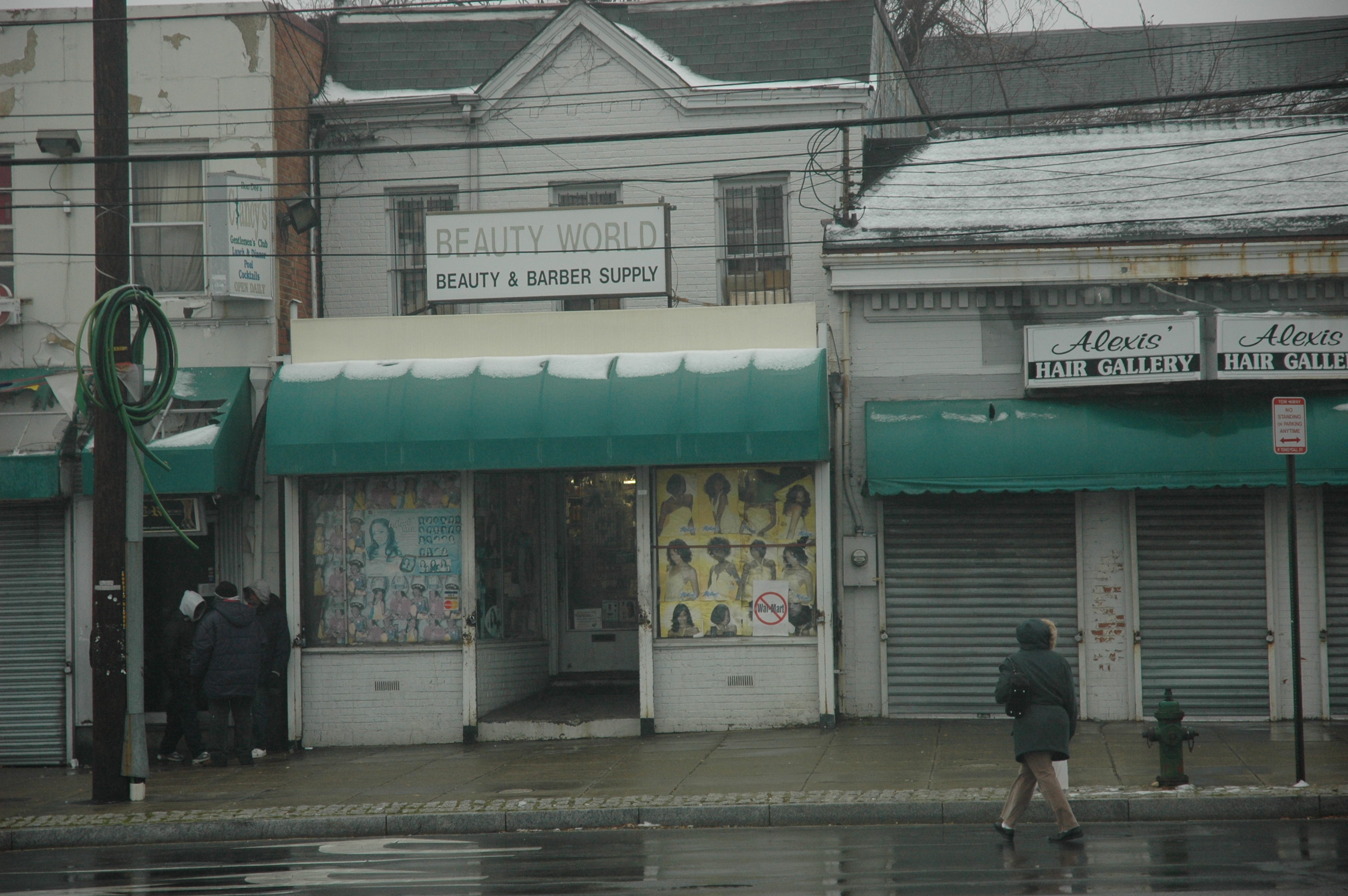
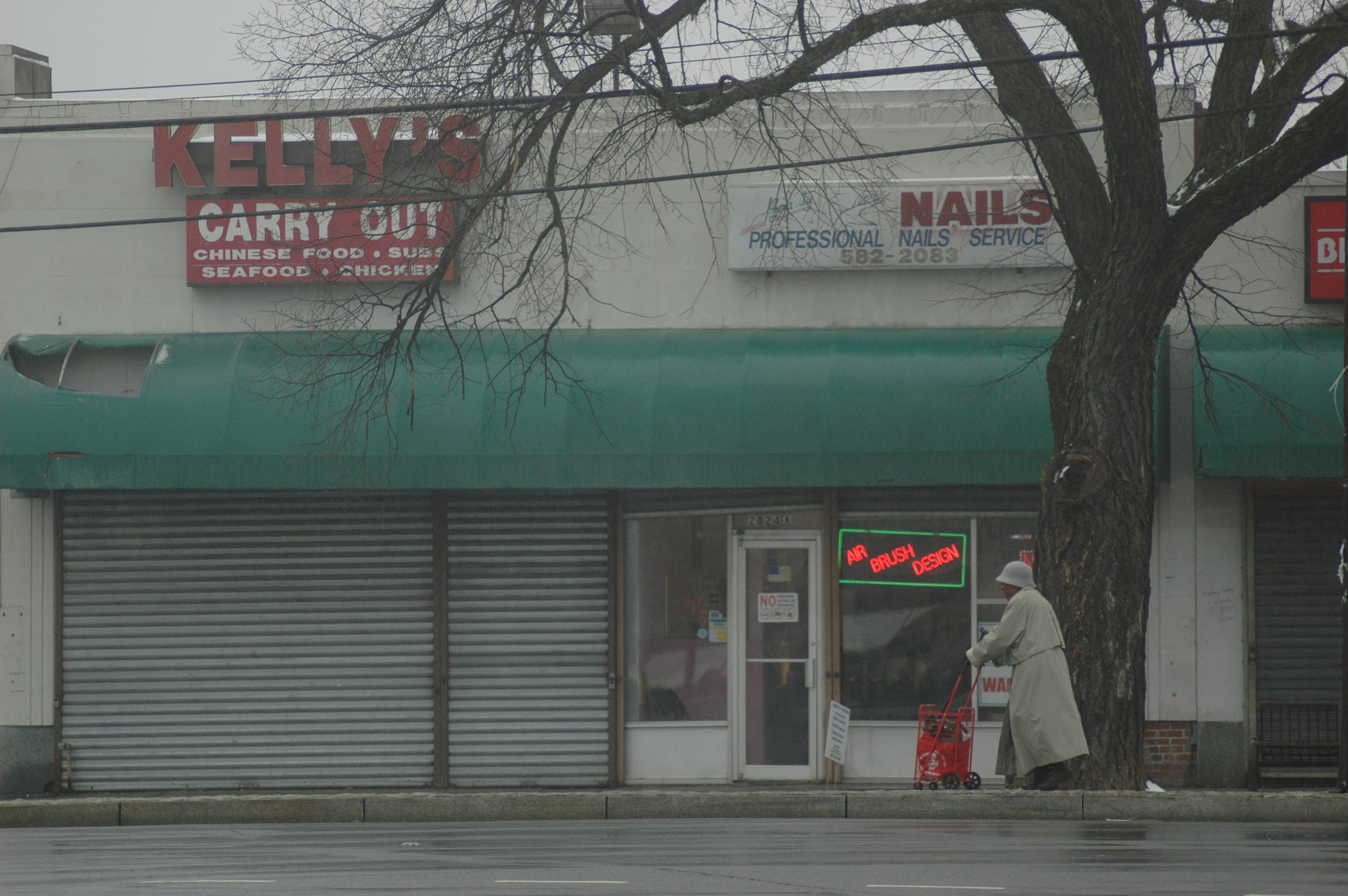
First Lady Michelle Obama picked up substantial flak last year when, as part of her “Let’s Move” campaign against childhood obesity, she endorsed Walmart for making healthier fresh food choices available in communities previously denied such options. I’m totally with Mrs. Obama on this. Apart from the “Sad Safeway”, the Skyland area has “Murry’s Family of Fine Foods”, a grocer with a limited choice of fresh produce and bread, but lots of soda, chips and other snacks, and canned and frozen foods. And then there’s a CVS/pharmacy, some banks, lots of shoe shops, wig shops and beauty parlours, car repair shops, a petrol station, a couple of liquor stores, a boarded-up Laundromat, and, of course, the ubiquitous array of fast food chains. Bring on Walmart with its selection of fresh produce, a deli, and bakery!

Despite misgivings about Walmart, if I were a resident of Anacostia, I would hail its arrival in the area. Walmart will boost the neighbourhood and signal its rebirth. It will herald a new era of development, job opportunities, and consumer choices. Yes, many of the jobs on offer will be low paying and low in skill requirements. However, a job is better than no job. And if you are determined, an initial job there could be the first in a succession of increasingly demanding positions, within Walmart or without.

It’s easy to be critical of Walmart and its business model, but, if not Walmart, then who will come in and invest in neglected parts of the District? So, albeit with misgivings, I thank Walmart for planning to come to the District, and creating new options, choices, and possibilities for local residents and consumers. May other retailers follow in its footsteps to these neighbourhoods.

Update on August 6, 2012: A fascinating article in the Washington Post taught me about an innovative way to facilitate the purchasing of more expensive fresh produce from a farmer’s market in Ward 8, an economically depressed part of the District. And First Lady Michelle Obama continues urging Americans to eat more healthily, especially fresh foods. Her book, American Grown, on gardening at the White House, is generating praise, criticism, and certainly discussion.

Energizing the base—and suppressing the opposition—in 2012

The state of the U.S. economy is the critical indicator for this year’s presidential election, but who better turns out their base will be as pivotal. Both President Barack Obama and probable Republican nominee Governor Mitt Romney have significant challenges in this respect.

While President Obama continues to receive high personal approval ratings, his overall job performance, most pointedly his stewardship of the economy, is viewed dimly—although perceptions have improved recently as he has become more populist in tone and aggressive in his criticism of Republicans. The classic question Americans ask in an election is whether they are better off now than they were four years previously. A majority of Americans perceive their situation as having deteriorated since Obama became president. As a result, enthusiasm and support for Obama have unquestionably waned; many are disillusioned.

The long-stated Republican goal of ensuring Obama to be a one-term president—see Senate Minority Leader Mitch McConnell on the subject—means too that the Republican presidential nominee—the “anti Obama”—needs to be someone around whom the party can really rally. The tight 8-vote victory of presumptive nominee Romney over Rick Santorum, with Ron Paul running a close third, in this week’s Iowa caucuses highlights that Republicans are not united by or enthralled with Romney’s candidacy. The Republican faithful do not support Romney with their usual commitment to their leading presidential contender. He is perceived as too moderate and inconsistent on conservative issues—he has derisively been called “John Kerry without the medals”—in a political party that has lurched rightward due to Tea Party influence, and his Mormon faith is problematic for the many evangelicals in the party.

So both the Democratic incumbent and the likely Republican contender have enthusiasm deficits. Turnout issues extend to the demography and make-up of their supporters.

President Obama has lost luster with many of his young, previously keen supporters. Youth in 2008, many voting for the first time, were greatly motivated by Obama’s campaign of change, his message of hope, and his inspiring personal story, and they canvassed, organized, and turned out for him in a big way. Now they are most disappointed. Change hasn’t come to the extent promised, and the tough jobless economic recovery and brutal political environment in Washington have crushed the hopefulness Obama represented.

The Occupy movement, which involves some former but now disillusioned Obama supporters, presents a challenge for Obama. Obama is part of the “1 percent” by dint of his financial success as the author of Dreams from My Father, his sensitive exploration of his roots, and The Audacity of Hope, his 2006 policy prescriptions for America; his life embodies the proverbial “American Dream”. Obama frequently espouses the themes the Occupy movement introduced into American political discourse, but it would be politically suicidal for him to get any closer to Occupy. Similarly, Occupiers might not feel motivated to organize or work for Obama this time, but it would be a massive blunder if they remained indifferent and didn’t turn up to vote for him on November 6. Particularly since Obama’s likely opponent is a very wealthy former CEO of Bain Capital, a private equity company, who epitomizes crony capitalism on Wall Street and the “1 percent”. Indeed, Romney was born into the “1 percent”. His father too was a CEO, of a car company.

A factor from the Iowa caucuses to watch was the strong turnout of young people for isolationist Ron Paul. Did they vote for Paul because of his obvious anger and disgust at the way things have been run? Could the main candidates re-engage these alienated youth for the general election?

Apart from youth and students, other constituencies vital to electing Obama in 2008 were women, poor people, African Americans, Hispanics, and other minorities. Republican lawmakers in over a dozen states, many of them so-called “swing” or battleground states, have passed laws in recent months that aim to restrict access to the polls. These laws intentionally target Democratic-leaning sections of society by imposing strict voter-ID registration requirements, limiting registration drives, and reducing early voting. In December 2011, Attorney General Eric Holder announced that the Justice Department would investigate such laws, to ensure they were not discriminatory or disenfranchising. Other ways have been used to limit voter turnout. For example, an aide to former Maryland Republican Governor Robert Ehrlich was recently convicted for initiating robocalls to African American voters in the 2008 gubernatorial election, telling them erroneously late that Election Day that they didn’t need to go and vote as the result had already been established.

Resorting to these types of initiatives to restrict voter turnout highlights a perception challenge for Republicans. The Republican Party is increasingly seen as a party of white, born-again, blue collar Americans. A wry observation from National Public Radio’s “Wait Wait…Don’t Tell Me” underscores this perception problem. Commenting on the Mayan prediction that the world will end in 2012, Alonzo Bodden noted that “Surprisingly, Herman Cain becomes the Republican nominee [he earlier suspended his campaign]. And when forced to choose between two black people, the conservatives decide to nuke the planet instead.”

The strong desire to deny Obama re-election may have Republicans flocking to the polls, even if they are lukewarm about their eventual nominee. Dismay with the gridlock and partisanship in Washington—the public has given Congress its lowest-ever job performance rating of single digits—could result in yet greater voter apathy, or could concomitantly inspire voters to emphatically kick out all incumbents.

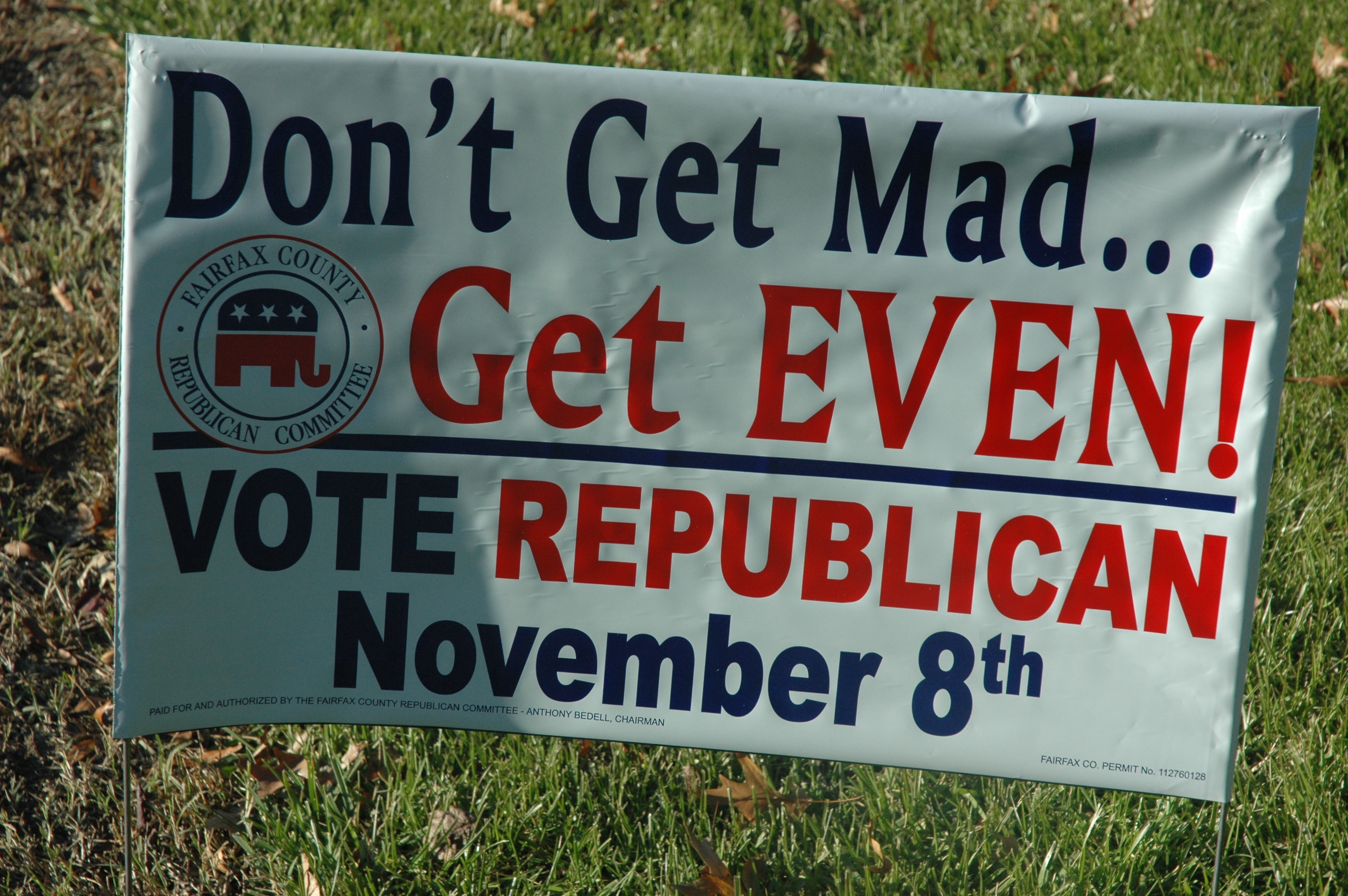
So, folks, if you thought the tone of the 2011 local elections was combative (see the photo of a Virginia campaign placard), watch out for 2012. It’s likely to be worse.

Christmas with American characteristics

Around the globe, people decorate this season. The retail sector the world over leaps at the excuse to adorn shops at this time of year, and American retailers are, of course, no exception. Even in “Communist” China and Shinto Japan, where most do not celebrate Christmas, shops are now brightly decorated. In Europe, lavishly decorated pedestrian shopping streets and traditional Christmas markets are seasonal pleasures. Some of the littlest towns or dorpies in South Africa have the fanciest Christmas light shows down their main streets.

The singularly American aspect to this decorating frenzy, I think, is the way in which Americans adorn the outside of their homes. While many in countries celebrating Christmas decorate inside their homes, nowhere in the world does one experience such fervour in decorating the exteriors of houses. Here in the United States, if you celebrate Christmas—and, sure, many do not—the chances are you will decorate the outside of your home. Working class, middle class, wealthy, religious, secular, elderly, young, you name it. If you celebrate Christmas here, you decorate outside. Some of it is very creative, tasteful, and discreet; some of it just too much and outrageously over the top. But, hey, it’s Christmas in America!

The paraphernalia for this outdoor decorating is readily available. Thanks to cheap Chinese imports, strings of LED lights—white! multicoloured! on green wire! on white wire!—can be purchased very reasonably. And one can connect lots of these together to create a quite dazzling effect; a box of lights notes that a maximum of 43 strings can be linked together. Another favourite is a type of “net” with white or multicoloured lights, which can be draped over bushes or railings. Every year, there are new lights, gimmicks, or other innovations on offer (clever Chinese), so you can always expand your collection. All this illumination gives communal cheer on these chilly winter nights when it becomes dark so early. Yet spiked electricity bills should give pause to those who overdo it, and overall increased energy consumption certainly gives this dimension to the season here an environmental cost.

One of the weirder manifestations of this decorating obsession is how some even jazz up their cars. Wreaths on the bonnets of cars are common. The one that always makes me giggle is the reindeer thing: A pair of “antlers” emerging from opposite side windows, with a red “nose” on the bonnet. Seriously!

European bakers are frantically busy at this time of year. The Germans, Swiss, Belgians, Dutch, Scandinavians all indulge in wonderful gingerbread, almond, cinnamon, shortbread, anise, and chocolate cookies around Christmas. Americans are also munching yummy cookies in December, with typical flavours including apple, pumpkin, oatmeal, cranberry, coconut, peanut, and chocolate.

The American twist on cookies at Christmas is the “cookie exchange”. Trust ever-practical Americans. The idea is that each person arrives with, say, three dozen of their favourite home-baked cookies, and then departs with the same amount of cookies chosen from the array of those others contributed. A key dimension, even etiquette, to this ritual is that the cookies have to be something over which one has taken time and trouble. It would be bad form to participate in a cookie exchange with goodies that involved little effort or were purchased, even if very special.

Giving is an essential part of Christmas. Americans are very generous people; indeed, they do the giving part of Christmas exceedingly well. In these depressed economic times, needs have increased everywhere, and one is inundated with requests for assistance. One’s mailbox is filled with requests for help, newspapers and churches list volunteer opportunities at nearby soup kitchens and charities, schools ask for assistance in providing gifts for needy children and constantly run food drives for local food pantries. The focus, as it should be at Christmas, is on giving. Yes, cynics note, charitable giving is tax deductible, and the tax year ends soon. But it’s the spirit of the giving—often anonymous—that illustrates my point:

Kmart announced that secret Samaritans in stores in Iowa, Indiana, Michigan, Montana, and Nebraska had paid off many layaway accounts on toys and children’s clothing, leaving only a few dollars or cents so the items remained in the system. An Indianapolis woman paid off about 50 people’s layaway orders and handed out $50 bills as she left the store—in memory of her husband who had just passed. For the fifth year in a row, a Salvation Army collection kettle outside a Clarksville, Tennessee supermarket has had a krugerrand placed into it. A Salvation Army collection point near Harrisburg, PA, announced recently that it too had received a krugerrand. Cynics may suspect drug smugglers laundering their ill-gotten gains, or former criminals trying to make good, but I’m not so sure.

The materialism of the receiving part of the American Christmas experience can be repulsive and excessive, although the capacity of that great engine of the global economy—the U.S. consumer—is greatly diminished in recent years. Numbers from “Black Friday” (the shopping day after Thanksgiving when stores traditionally move into the black for the year) and “Cyber Monday” (the day for deals on electronics, especially for online purchasing) were up this year from last. Obviously, it’s too early to tell if the Christmas shopping season overall has been successful for retailers, but the frequency with which one sees UPS brown trucks and FedEx Home Delivery vehicles on the road suggests that people have been shopping hard. A middle-class suburban detail that amazes this South African is how parcels are dropped off by front doors and then left there, awaiting collection when people return home at the end of the day. Such parcels would quickly disappear in middle-class suburban Johannesburg or Cape Town–and perhaps not fare too well either in most American towns or inner city neighbourhoods.

Yet the most noteworthy aspect of Christmas in America is high attendance of church services, a phenomenon that is well documented elsewhere, and one that is categorically not true of all societies celebrating Christmas. Whether you go to church or choose not to go this Christmas, a very merry Christmas to all!

The “99 percent”

A tense standoff last night between Occupy D.C. protesters and police over an unauthorized wooden structure that protesters provocatively erected and police predictably took down, arresting 31 in the process, may escalate into a wider confrontation. Police may now decide that the two Occupy D.C. camps must be cleared. Or the camps may be allowed to continue, so long as the occupants resume their previous non-aggressive style. Whatever official decision is made, as the temperature dips further this winter, I predict that the ranks of Occupy D.C. are likely to thin.

Police in Denver, Los Angeles, New York, Oakland, Philadelphia, and Portland, amongst other cities, have already evicted protesters from parks and arrested those who resisted leaving. The clearing of the University of California at Davis campus was particularly controversial due to police pepper spraying kneeling protesters, actions that were captured on video. Mayors have justified clearing the parks as necessary for public health, and overnight camping is prohibited in many parks.

Yet the factors that motivated the Occupy movement have hardly dissipated. They are still very much in play. These include anger at expanding income disparities, where the wealthy “1 percent” gets richer and richer and the rest of society—the “99 percent”—receives diminishing or no benefit. Protesters are also disgusted at crony capitalism and how individuals and institutions in the financial and mortgage sectors were not punished for their role in the 2008 financial collapse and mortgage crisis but were instead bailed out. There is also deep frustration over ongoing unemployment and the lack of prospects, and worry about debt and the inability, for example, to repay student loans.

While the Occupy movement may have a winter go-slow, there is no question in my mind that the movement will be back in the spring, especially because of the pivotal presidential election in 2012.

The Occupy movement has profoundly changed political discourse in the United States. All discussion now on how to revive the economy to foster job creation while simultaneously cutting spending and raising revenues to cut the federal debt is phrased in terms of the impacts on high-earners, the middle class, the working poor, and the unemployed. Where to make necessary spending cuts and how and for whom to increase taxes are the core issues of the 2012 presidential campaign. That is the accomplishment of the Occupy movement.

As I walked through the two camps of Occupy D.C. last week, chatting to people here and there, the significant political impact of the Occupy movement was not all I pondered. I marveled, honoured, and celebrated freedom of speech and the right to protest.

The two Occupy D.C. camps are in the heart of Washington, D.C. The one camp, Occupy McPherson, is literally two blocks northeast of the White House; this is where yesterday’s clash with the police occurred. The other camp is at Freedom Plaza. This site is flanked by Pennsylvania Avenue as the road heads from the White House and the Treasury Department to Capitol Hill, passing the Willard Hotel, one of D.C.’s swankiest, and the National Theatre, both now gaily festooned in Christmas finery.

Yes, Washington is the “protest capital” of the United States, so local authorities are used to this type of activity and are conditioned to tolerate it. Yes, prior to yesterday’s skirmish, police had issued warnings to D.C. Occupiers about, for example, urinating in public and the like; possible pretexts to clearing the camps? Nevertheless, the camps are an extraordinary sight, and their persistence in their prominent locations highlights the core values of a tolerant society.

During my most recent stroll through Occupy D.C. camps, I wondered how other societies marked by huge disparities in income between rich and poor would handle such ongoing protests. I tried to imagine “Occupy Beijing”, with protesters camping in Beihai Park, the dusty public park nearest to the lush, well-manicured Zhongnanhai, Chinese leaders’ official compound in the heart of Beijng. The Chinese leadership’s initial tolerance of weeks-long protests on Tiananmen Square in 1989 ended in a massive blood bath. Today on Tiananmen Square, any attempt at protest, whether it is shouting obscenities or unfurling a critical banner, is squashed immediately by the vigilant, always present security officials. Instant arrest is guaranteed.

I thought about other protest movements that have emerged from the “99 percent” in 2011: The groundswell of public discontent in Arab countries that has felled dictators; and the protests in India supporting activist Anna Hazare’s campaign for tougher laws against chronic graft.

As I meandered amidst the tents of Occupy D.C., I wondered about South Africa, my home country with its alarming income inequality. Wealth there is concentrated in a small elite, government and corporate corruption is now widespread, unemployment is shockingly high, and many young people feel they have no prospects or productive means to improve their lives. Despondency increased with recent passage of a democracy-narrowing Protection of State Information Bill (Secrecy Bill) whereby classified information that is in the public interest cannot now be disclosed. Exposing government corruption or malfeasance is now seen as threatening national security.

How tolerant would South African authorities be of an “Occupy Pretoria” or an “Occupy Cape Town” that tapped into public disgust at government corruption? Imagine a tent city of frustrated, unemployed youth and other representatives of the “99 percent” in the terraced gardens under the Union Buildings in Pretoria, or in the Gardens adjoining Parliament in Cape Town. Would the South African government allow such months-long encampments? I reckon neither an “Occupy Pretoria” nor an “Occupy Cape Town” would be tolerated as long as Occupy D.C. has been allowed to endure.

Taking a leaf out of the Republican presidential field

How Washingtonians deal with the fallen tree leaves adorning their lawns, backyards, and pavements is a revealing prism through which to contemplate illegal immigration in the United States, and Republican Party presidential candidates’ differing views on it.

Many in the area rake up their leaves themselves—or have their children or a neighbourhood teenager do it—and then bundle them into bulky bags that wait expectantly on sidewalks for collection on the next “trash day”. Many hire private gardening services to tend to the mass of foliage that nature dumps most predictably this season. The gardening service workers might gather the leaves with buzzing, mosquito-like leaf blowers, bag the leaves, and then remove the bags immediately. Alternatively, leaves can be left in piles curbside, to become shriveled, dried or soaking (weather permitting) brown fodder, that county workers come and slurp up with giant “vacuum cleaners” on scheduled collection days.

Latinos from Colombia, El Salvador, Guatemala, Mexico, or Nicaragua—you name the Central or Latin American country—invariably comprise the work forces of these gardening services here in the D.C. metro area. And one has to wonder how many of these folk are legally in the United States. I would hazard the guess that most are illegals.

Given the inability to agree at the federal level on how to address the perennial problem of illegal immigration, states have begun taking action themselves. Adopted measures include, for example, requiring police to ask people about their immigration status when in contact with them for other reasons. Such measures are highly controversial and are presently under judicial review.

In states that have passed such measures, including Alabama, Arizona, and Georgia, labour that helped tend fields, plant crops, and harvest fruit has noticeably “disappeared”.

Despite high unemployment rates among local American residents, reports from these states note the apparent reluctance of locals to perform the work that undocumented workers so typically provide.

This quandary is familiar to me. It reminds me of South Africans simultaneously panning Malawians, Mozambicans, and Zimbabweans for coming illegally to South Africa and taking jobs from local people—while not being willing to perform these jobs themselves, despite astronomically high unemployment.

The two current GOP frontrunners, former Speaker Newt Gingrich and former Massachusetts Governor Mitt Romney, present contrasting views over whether to allow the reputed eleven million illegal immigrants who have settled in the United States a path to legal residency.

In the most recent Republican presidential debate, Gingrich opined: “If you’ve come [to the United States] recently, you have no ties to this country, you ought to go home. Period. If you’ve been here 25 years and you got three kids and two grandkids, you’ve been paying taxes and obeying the law, you belong to a local church, I don’t think we’re going to separate you from your family, uproot you forcefully and kick you out.”

Romney retorted that such a policy would be a “magnet”: “To say that we’re going to say to the people who have come here illegally that now you’re all going to get to stay or some large number are going to get to stay and become permanent residents of the United States, that will only encourage more people to do the same thing.”

Gingrich responded: “I don’t see how the party that says it’s the party of the family is going to adopt an immigration policy which destroys families that have been here a quarter-century… And I’m prepared to take the heat for saying let’s be humane in enforcing the law without giving them citizenship but by finding a way to create legality so that they are not separated from their families.”

Romney then noted that he was “not going to start drawing lines about who gets to stay and who gets to go. The principle is that we are not going to have an amnesty system that says that people who come here illegally get to stay for the rest of their life in this country legally.”

The Republican Party already has a perception problem with Latino voters, the fastest growing part of the U.S. population. A debate exchange such as this between the present two top contenders in the GOP presidential race cannot help Republican prospects. Yet the question is whose views better reflect those of the Republicans who will vote in the Republican primaries. Will Gingrich’s “liberal” (by Republican standards) but more realistic views on illegal immigration hurt him in the primaries or not?  President Barack Obama and Congressional Democrats had supported passage of the Dream Act earlier this year that would have allowed certain categories of illegals to be on a path to eventual citizenship, but Congressional Republicans voted it down.

Whether or not they can vote, you can be assured that Washington’s leaf blowers are following the contortions of the national debate on illegal immigration with great interest.